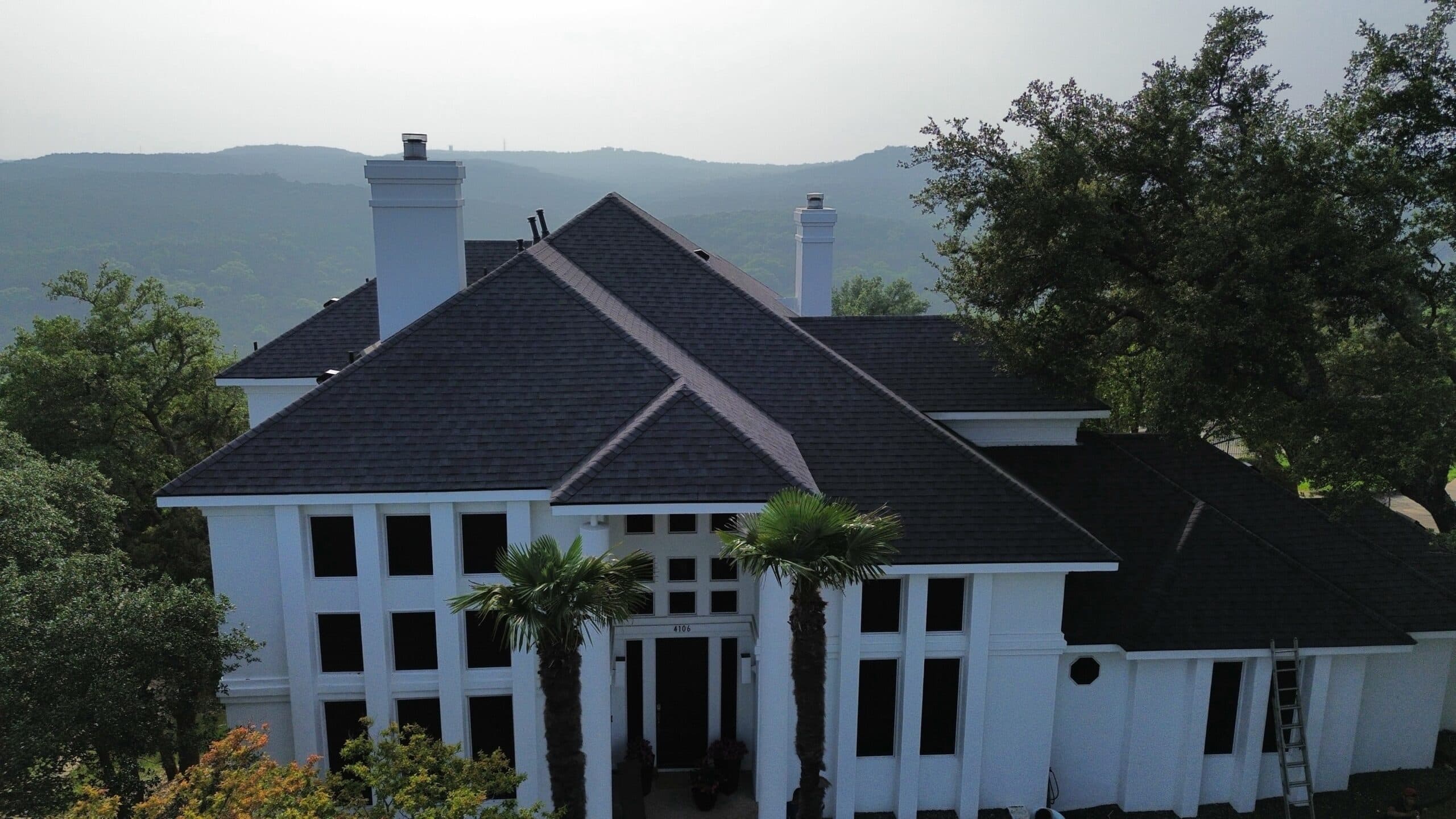
A leaking roof at 2 AM during a Central Texas thunderstorm is one of the most stressful experiences a homeowner can face. But most roof problems don't start with a catastrophic failure — they start small. A missing shingle here, a cracked flashing there. The homeowners who catch these early pay $300–$800 in repairs. The ones who wait pay $8,000–$25,000 for a full replacement.
This guide covers everything Austin and Central Texas homeowners need to know about roof repairs: what common problems look like, what they cost to fix, and how to decide whether repair or replacement makes more sense for your situation.
The Most Common Roof Repair Problems in Central Texas
Central Texas throws a lot at roofs — blistering summer heat, spring hailstorms, and the occasional severe winter event like the 2021 freeze. Here are the problems we fix most often:
1. Storm & Hail Damage
Central Texas sits in one of the most active hail corridors in the country. Round Rock, Georgetown, and the broader Austin metro regularly see hail events that strip granules, crack shingles, and dent metal flashings.
What it looks like:
- Dark spots or bare patches on shingles (granule loss)
- Circular dents or cracks on ridge caps
- Dented gutters and downspouts (a reliable indicator of hail size)
- Bruised shingles that feel soft when pressed
Typical repair cost: $400–$2,500 depending on extent. Widespread hail damage often qualifies for an insurance claim — see our insurance claim guide.
2. Flashing Failures
Flashing is the metal that seals roof penetrations: chimneys, skylights, vents, and valleys. It's the #1 source of roof leaks in Central Texas — not the shingles themselves. Flashing expands and contracts with our extreme temperature swings (20°F in winter, 100°F+ in summer), and over time the sealant cracks and separates.
What it looks like:
- Water stains on ceilings near chimneys or skylights
- Visible gaps or rust at roof penetrations
- Daylight visible from the attic near transition points
Typical repair cost: $200–$600 per penetration.
3. Missing or Damaged Shingles
High winds — common during Central Texas thunderstorms — can lift and remove individual shingles or small sections. Once the underlayment is exposed, water infiltration starts within the next rain event.
What it looks like:
- Visible gaps in the roof surface from the ground
- Shingle pieces in your yard or gutters after a storm
- Exposed black felt (underlayment) visible on the roof
Typical repair cost: $150–$500 for a small section.
4. Sagging or Soft Spots
Sagging indicates structural compromise — either the roof decking (OSB or plywood) has rotted from prolonged moisture exposure, or the underlying rafters or trusses are damaged. This is one of the most serious repair categories.
What it looks like:
- Visible dip or wave in the roofline from the street
- Soft or spongy feeling when walking on the roof
- Water stains in the attic with associated soft decking
Typical repair cost: $500–$3,000+ depending on how many decking panels need replacement and whether structural members are involved.
5. Granule Loss & Aged Shingles
Asphalt shingles shed granules over time, especially after hail events. Heavy granule loss accelerates aging, reduces fire resistance, and signals the shingles are nearing end of life. You'll often notice this as dark, bare-looking patches.
What it looks like:
- Granules accumulating in gutters or downspout splash zones
- Shingles look darker or "bald" in patches
- Shingles feel brittle or crumbling at edges
Typical repair cost: Spot repairs $200–$600, but widespread granule loss often indicates full replacement is more economical.
6. Pipe Boot Failures
Every plumbing vent pipe penetrating your roof has a rubber boot seal. These rubber boots last 8–12 years in Texas heat before cracking — far shorter than the roof itself. A failed pipe boot is an extremely common source of slow leaks that cause attic mold and ceiling damage.
What it looks like:
- Water stains directly below plumbing vent pipes
- Visible cracked or torn rubber collar around pipe where it exits the roof
Typical repair cost: $150–$300 per pipe — one of the best value repairs you can make on an aging roof.
Roof Repair Cost Guide: Central Texas 2026
| Repair Type | Typical Cost Range | Notes |
|---|---|---|
| Pipe boot replacement | $150–$300 | Per pipe; common on 8–15 yr roofs |
| Shingle patch (small area) | $150–$500 | Up to 10 shingles |
| Shingle patch (large area) | $500–$1,500 | 10–50 shingles |
| Flashing repair | $200–$600 | Per penetration |
| Valley repair | $300–$800 | Depends on linear feet |
| Ridge cap replacement | $250–$700 | Most common after hail |
| Soffit/fascia repair | $200–$1,000 | Often found during inspection |
| Deck board replacement | $500–$2,000 | Per affected section |
| Full flashing replacement | $800–$2,000 | Chimney, skylight perimeter |
| Emergency tarping | $300–$600 | Temporary protection, 24/7 available |
Important note: Labor costs in Austin are 10–15% higher than the Texas average due to demand. Always get at least two written quotes for repairs over $1,000.
Repair vs. Replace: How to Decide
This is the most important question — and the honest answer depends on your roof's age and how much of it is affected.
The 50% Rule
If repair costs exceed 50% of a new roof's cost, replacement is almost always the better financial decision. You're paying near-replacement money without getting a new roof or warranty.
Age-Based Guidance
| Roof Age | Situation | Recommendation |
|---|---|---|
| Under 10 years | Isolated damage | Repair — roof has years of life left |
| 10–15 years | Storm damage | Repair if under 30% of surface; consider insurance claim |
| 15–20 years | Widespread issues | Replace — especially if multiple problems |
| 20+ years | Any significant damage | Replace — at or near end of expected lifespan |
| Any age | Structural/deck damage | Full assessment required |
When Repair Is Clearly the Right Call
- New roof (under 10 years) with storm damage — repair and file insurance if applicable
- Isolated pipe boot failures — cheap fix, prevents significant interior damage
- Single missing shingles after a wind event — fast patch prevents further water infiltration
- Flashing leak at a single penetration — targeted fix with clear cause
When Replacement Makes More Sense
- Multiple active leaks in different areas — a sign of systemic failure
- Shingles that are brittle, curling, or buckling across the majority of the roof
- You're planning to sell within 2–3 years — a new roof has strong ROI and removes a buyer objection
- Roof is 20+ years old and has had repeated repairs — you're putting money into a failing system
What a Professional Roof Inspection Covers
Before any repair or replacement decision, a qualified inspection gives you an objective picture. At Ripple Roofing, our free roof inspections include:
- Full visual inspection of all shingle fields, ridges, valleys, and edges
- Flashing inspection at every penetration (chimney, vents, skylights, walls)
- Gutters and fascia condition assessment
- Attic inspection (when accessible) for decking moisture, ventilation, and insulation condition
- Photo documentation of all findings
- Written report with prioritized repair recommendations
- Insurance claim guidance if storm damage is identified
No sales pressure — we'll tell you honestly whether repair, replacement, or monitoring is the right path.
The Real Cost of Waiting
The most expensive roof repair is the one you put off. Here's what delayed action actually costs:
Small flashing leak ignored for 6 months:
- $250 flashing repair → $1,200 in rotted decking + $800 in drywall/insulation
- Total unnecessary cost: $1,750+
Missing shingle after a storm, not addressed:
- $200 patch → $600 in water-damaged decking + potential mold remediation ($2,000–$8,000)
- Total unnecessary cost: $2,600–$8,600
Granule loss ignored through end of life:
- Accelerated shingle aging cuts 3–5 years off roof lifespan
- On a $14,000 roof, that's $2,100–$3,500 in reduced life expectancy
Small problems compound fast in Texas weather conditions. The best maintenance strategy is a professional inspection every year or after every major storm.
Why Central Texas Homeowners Choose Ripple Roofing
We're based in Round Rock and serve the entire Central Texas region — Austin, Georgetown, Cedar Park, Pflugerville, Leander, and beyond. Our repair process is straightforward:
- Free inspection — same-day or next-day scheduling for storm events
- Written quote — detailed breakdown of what needs to be done and why
- Transparent pricing — no hidden fees, no upselling
- Insurance support — we work directly with your adjuster on storm damage claims
- CertainTeed certified — all materials meet manufacturer warranty requirements
- 24/7 emergency service — because storms don't wait for business hours
Schedule your free inspection or call (512) 763-5277 — we're available 24/7 for emergencies.
Frequently Asked Questions
How quickly can you respond to an emergency roof leak?
We offer 24/7 emergency service across Central Texas. For active leaks during or after a storm, we can typically have a crew on-site within 2–4 hours for emergency tarping to stop water intrusion.
Will my homeowner's insurance cover roof repairs?
It depends on the cause. Storm damage (hail, wind, lightning) is typically covered. Wear-and-tear repairs are not. We'll inspect your roof and give you an honest assessment of whether your damage qualifies for a claim — and we're experienced at working with all major Texas insurers.
How long do roof repairs take?
Most spot repairs are completed in a single day. Larger repairs involving decking replacement or full flashing work may take 1–2 days. We'll give you a clear timeline before starting.
Do you warranty your repair work?
Yes — all our repair work is backed by a workmanship warranty. Material warranties depend on the products used; we use CertainTeed-certified materials wherever applicable.
Can you match my existing shingles?
We carry a wide range of shingle colors and styles. On older roofs, an exact match isn't always possible due to weathering and discontinued colors — we'll show you options before starting work.