"How old is your roof?" It sounds like a simple question. Most homeowners don't know the answer — and that uncertainty can cost tens of thousands of dollars.
In Texas, roof lifespan isn't just a manufacturer spec. The heat, hail, and UV intensity here actively shortens the life of most roofing materials compared to national averages. A roof rated for 30 years in New England might give you 18–22 years in Central Texas.
This guide gives you real-world lifespan numbers for every common roofing material, explains what shortens a Texas roof's life, and tells you exactly what to watch for when your roof is approaching the end.
Quick Answer: Roof Lifespan by Material in Texas
| Material | Manufacturer Rating | Real-World Texas Lifespan |
|---|---|---|
| 3-Tab Asphalt Shingles | 20–25 years | 12–18 years |
| Architectural Shingles | 25–30 years | 18–25 years |
| Impact-Resistant (Class 4) Shingles | 30 years | 22–28 years |
| Standing Seam Metal | 40–70 years | 40–60 years |
| Stone-Coated Steel | 50 years | 40–50 years |
| Concrete Tile | 50 years | 30–45 years |
| Clay Tile | 50–100 years | 40–60 years |
| Wood Shake | 20–30 years | 10–15 years |
The gap between manufacturer ratings and Texas reality comes down to one thing: our climate is uniquely brutal on roofing materials.
Why Texas Shortens Roof Life
1. Extreme UV Exposure
Central Texas averages 220+ sunny days per year. UV radiation breaks down the asphalt binders in shingles — the compound that holds the granules in place and keeps the material flexible. Once UV degradation begins, shingles become brittle, crack under temperature stress, and lose their water-shedding ability.
Metal and tile are far more UV-resistant, which is a big reason they outlast shingles here.
2. Temperature Swings
Austin regularly goes from 28°F in January to 105°F in August. That's a 77-degree swing that your roof handles solo, all day, every day. Roofing materials expand and contract with every cycle — over years, this causes:
- Shingle cracking and splitting
- Nail back-out (fasteners work loose as decking moves)
- Flashing separating from penetration points
- Ridge and hip caps cracking
3. Hail — The Biggest Wild Card
Central Texas sits in one of the most active hail corridors in North America. A single hail event can take 10 years off the lifespan of a standard shingle roof — not because it creates immediate leaks, but because it:
- Knocks off granules (UV protection gone)
- Creates micro-fractures that expand with heat cycles
- Compresses the underlying mat, accelerating brittleness
If your roof took a direct hail hit at any point, you should factor that event into your lifespan estimate. A 10-year-old roof that took a major hail storm may be performing like a 16-year-old roof.
Learn more about identifying hail damage and Class 4 shingles that resist it.
4. Summer Heat Buildup
Attic temperatures in Texas can reach 150–160°F in July and August without proper ventilation. That heat radiates back through the decking and cooks shingles from the underside simultaneously with UV cooking them from the top.
A properly ventilated attic can extend shingle life by 3–5 years. Homes with poor ventilation see the reverse — shingles age faster, and the evidence shows up as widespread cupping and granule loss across the entire field of the roof.
Read our roof ventilation guide for Texas homes to understand whether your attic is set up correctly.
Lifespan Breakdown by Material
Asphalt Shingles (Most Common)
Asphalt shingles cover the vast majority of Central Texas homes. Within this category, there are meaningful lifespan differences:
3-Tab Shingles The thin, flat single-layer shingle that was standard through the 1990s. Rarely installed new today.
- National lifespan: 20–25 years
- Texas lifespan: 12–18 years
- Biggest weakness: Low mass means fast UV and heat degradation
Architectural (Dimensional) Shingles The standard for new construction and replacement today. Thicker, heavier, with a layered look.
- National lifespan: 25–30 years
- Texas lifespan: 18–25 years
- Common brands: GAF Timberline HDZ, CertainTeed Landmark, Owens Corning Duration
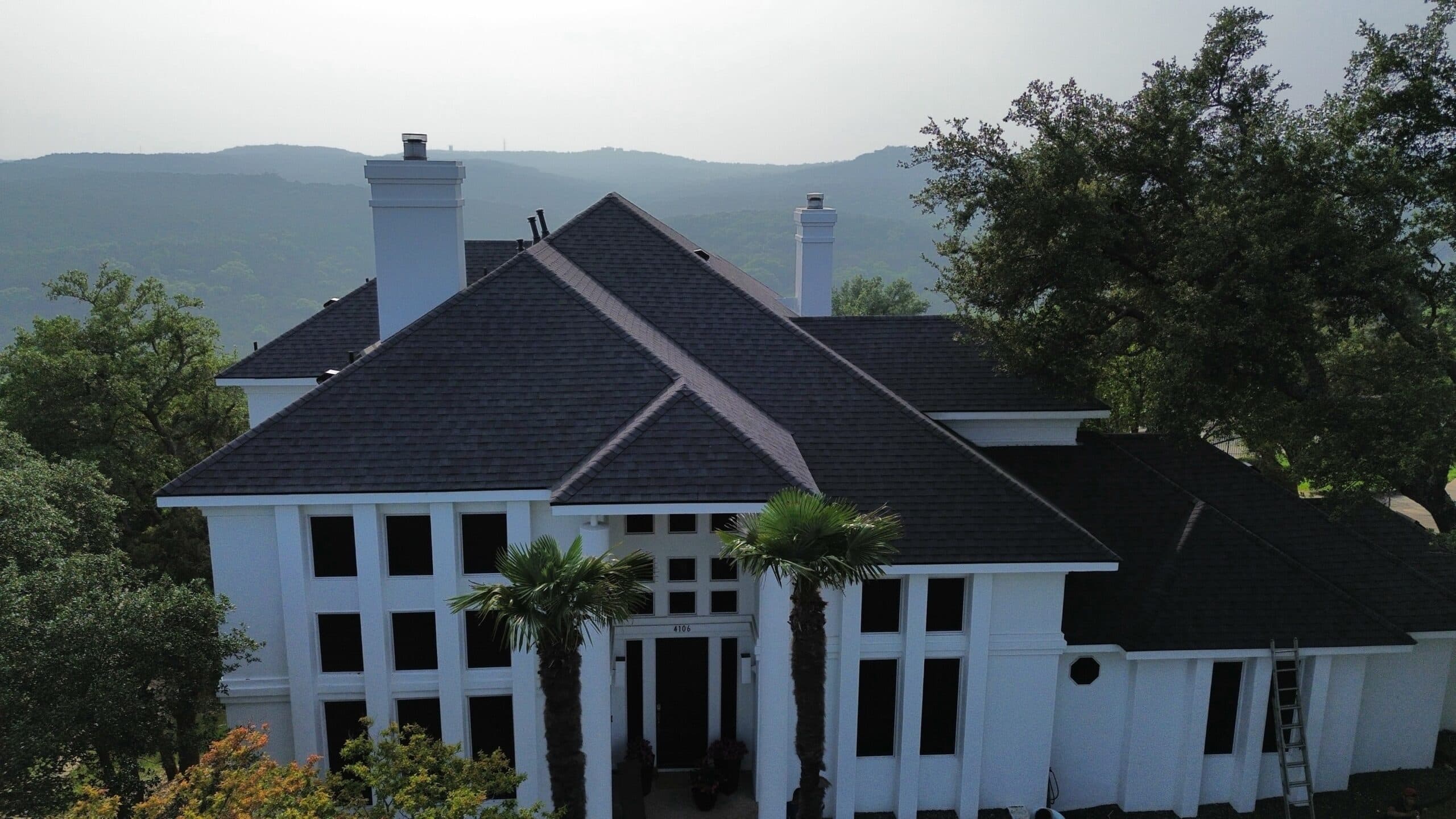
Impact-Resistant (Class 4) Shingles The top tier of asphalt. A rubberized SBS-modified asphalt core that flexes under impact rather than cracking.
- National lifespan: 30 years
- Texas lifespan: 22–28 years
- Bonus: 10–30% insurance premium discounts from most Texas insurers
- Common brands: GAF Timberline ArmorShield II, CertainTeed NorthGate, Owens Corning Duration STORM
If you're replacing a shingle roof, Class 4 is strongly worth the 10–15% cost premium in this climate — you get a longer roof and lower annual insurance costs.
Metal Roofing
Metal is increasingly popular in Texas because it genuinely thrives here. Heat, UV, and hail are far less damaging to metal than to asphalt.
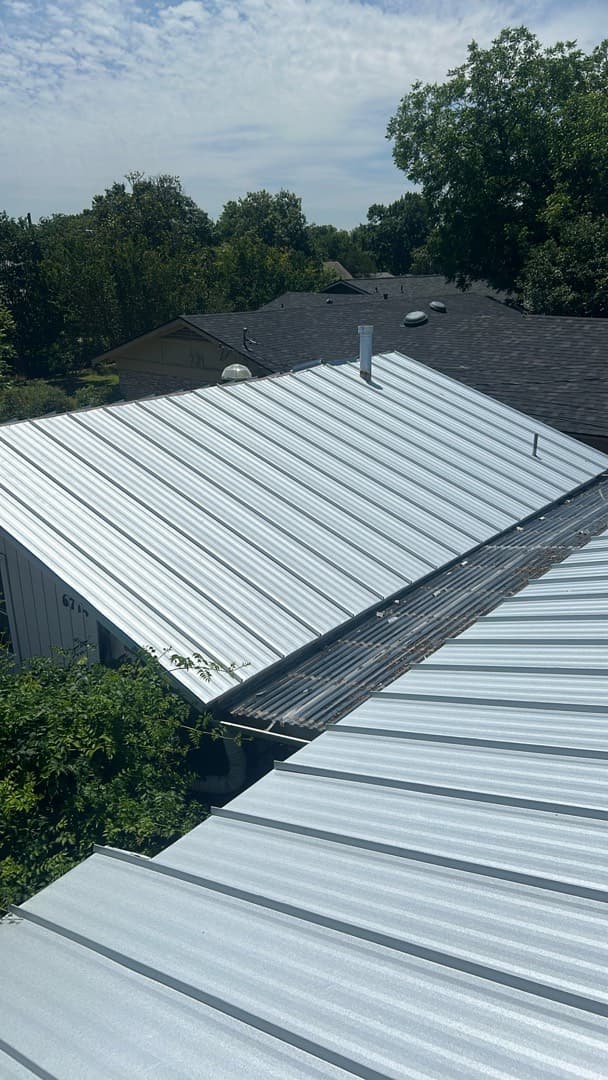
Standing Seam Metal Concealed fasteners, floating panel system that handles thermal expansion without stress.
- Texas lifespan: 40–60 years
- Hail resistance: Excellent (Class 4 impact rating standard)
- Best for: Homes where the owner plans to be long-term; maximizes ROI over 20+ years
Stone-Coated Steel Steel core with factory-applied stone granule coating. Looks like tile or shake, performs like metal.
- Texas lifespan: 40–50 years
- Hail resistance: Excellent
- Best for: HOA neighborhoods that require traditional aesthetics; Class 4 rating with insurance discounts
See our detailed comparison: Stone-coated steel vs. asphalt shingles in Texas.
Tile Roofing
Tile is common in Spanish-style and Mediterranean homes throughout Central Texas, particularly in older Austin neighborhoods and Hill Country areas.
Concrete Tile
- Texas lifespan: 30–45 years
- Weakness: Absorbs moisture over time, which accelerates freeze-thaw cracking — less of an issue in Central Texas than in north Texas
Clay Tile
- Texas lifespan: 40–60 years
- More moisture-resistant than concrete
- Higher upfront cost; lower lifecycle cost
The tile caveat: The tile itself outlasts the underlayment. Most tile roofs need an underlayment replacement (without removing the tile) at the 20–25 year mark. Budget for this — it's far cheaper than full replacement, but it's a real cost.
Wood Shake
Wood shake roofing is beautiful but struggles in Texas.
- Texas lifespan: 10–15 years (vs. 20–30 in drier, cooler climates)
- Problem: Moisture cycling from Texas storm seasons followed by drought causes rapid splitting and warping
- Many insurers are now surcharging or declining to insure wood shake roofs in Texas
- If you have a wood shake roof older than 10 years, schedule an inspection
"My Roof Is X Years Old — Should I Be Worried?"
Use this as a general guide:
Under 10 years: If installed properly with quality materials, you're solidly in the safe zone. Focus on maintenance — clean gutters, keep overhanging trees trimmed, and schedule an inspection every 2–3 years.
10–15 years: Start paying attention. Have a professional inspection done if you haven't in the past 2 years. Know your material and installation details if possible.
15–20 years: Your roof is approaching the back half of its life in Texas. If you've had a significant hail event, inspect sooner. Start budgeting for replacement.
20+ years (asphalt shingles): Get an inspection this year. At this age, most asphalt roofs in Texas are showing meaningful degradation. You may have more life left, or you may be overdue — don't guess.
20+ years (metal or tile): You're likely still in good shape, but inspection is warranted. Focus on flashings, which are often the first failure point on long-lived roofs.
5 Signs Your Texas Roof Is Running Out of Life
1. Granule Loss in the Gutters
After rain, check your downspouts. If you see dark, sand-like granules washing out — especially in volume — your shingles are losing their UV and impact protection. Moderate granule loss means you have a few years left. Heavy, uniform granule loss means the clock is running short.
2. Curling or Cupping at Shingle Edges
Shingles curl upward at the edges (cupping) or downward at the center (clawing) as they age and dry out. Either pattern indicates the material is past its peak and will only get worse. See our full list of 5 signs you need a roof replacement.
3. Visible Cracking Across the Surface
When asphalt dries out in the Texas heat, it develops a network of fine surface cracks — similar to cracked mud. This is called alligatoring. It's not immediately a leak, but it means the material is failing and a leak is coming.
4. Shingle Granules Worn Smooth Around Penetrations
Check around chimneys, vents, and pipes. These high-stress zones age faster than the open field of the roof. If granules are completely worn smooth in a 12-inch ring around penetrations, your overall roof is likely not far behind.
5. Flashing Failures
Flashings — the metal strips sealing around chimneys, vents, and walls — are often the first thing to fail on an aging roof. Lifted, cracked, or rusted flashing is an immediate leak risk and a sign that your roof system overall is aging.
How to Find Out Your Roof's Age
If you don't know how old your roof is:
- Check your closing documents — Home inspection reports and disclosure statements often list roof age or condition at time of purchase
- Pull permits — Most Texas municipalities keep permit records for roof replacements; search your county appraisal district or city permit portal
- Ask a roofer — An experienced roofer can often estimate age within 2–3 years from visual inspection alone
- Check your insurance file — If your insurance company did a roof inspection when you bought the policy, they may have documented the age
The Real Cost of Running a Roof Too Long
A failed roof doesn't just cost the price of a new roof. It costs:
- Water damage: $2,500–$15,000 in ceiling, insulation, and drywall repairs
- Mold remediation: $500–$6,000
- Structural damage: $10,000–$50,000 if decking and framing are compromised
- Insurance complications: Claims may be denied if the insurer determines the damage is from wear rather than a storm event
The math almost always favors proactive replacement over emergency replacement. Planned replacements let you choose materials, get multiple bids, and schedule during good weather windows. Emergency replacements happen in the worst conditions, often with limited contractor availability and no time to compare options.
For current pricing, see our 2025 roof replacement cost guide for Austin and Central Texas.
When Is the Best Time to Replace a Roof in Texas?
Texas doesn't have a true "roofing off-season," but timing matters:
- Best window: October through February — Cooler temperatures, lower storm risk, and contractors typically have more availability
- Avoid: June through August — Peak heat creates difficult working conditions and materials can be harder to install correctly at extreme temperatures
- Spring (March–May): High demand after hail season; book early or wait times extend significantly
If your roof is approaching the end of its life, don't wait for the next storm season to force your hand. Replacing it proactively in fall or winter gives you the best outcome — better pricing, more choices, and a new roof ready for hail season.
Frequently Asked Questions
What's the average roof lifespan in Texas compared to the national average? Expect roughly 15–25% less life out of most materials in Texas than the manufacturer's national rating. A 25-year architectural shingle rated for the average U.S. climate typically delivers 18–25 years here, driven mainly by UV exposure, heat, and hail.
Does a hailstorm shorten my roof's life even if it doesn't cause an active leak? Yes. Hail impacts knock off protective granules and create micro-fractures that don't leak immediately but accelerate UV and heat damage going forward. A 10-year-old roof that's taken a significant hail hit can end up performing more like a 15- or 16-year-old roof.
Is it better to replace my roof before it actually fails? In almost every case, yes. Planned replacements let you choose materials, get competitive bids, and schedule during good weather. Roofs that fail unexpectedly force an emergency replacement — usually at a premium, with less contractor availability, and often after water damage has already spread inside the home.
Can regular maintenance really extend my roof's lifespan? Yes, meaningfully — well-maintained roofs commonly outlast neglected ones by 5–8 years. See our full roof maintenance guide for the exact seasonal checklist.
Get a Free Roof Assessment in Central Texas
If you're not sure where your roof stands, the fastest answer is a free inspection from our team. We'll tell you exactly where your roof is in its life, what — if anything — needs attention now, and what timeline you're looking at for replacement.
We serve Round Rock, Austin, Georgetown, Cedar Park, Leander, Pflugerville, Hutto, San Marcos, and all surrounding communities.
No pressure. No upsell. Just an honest assessment.