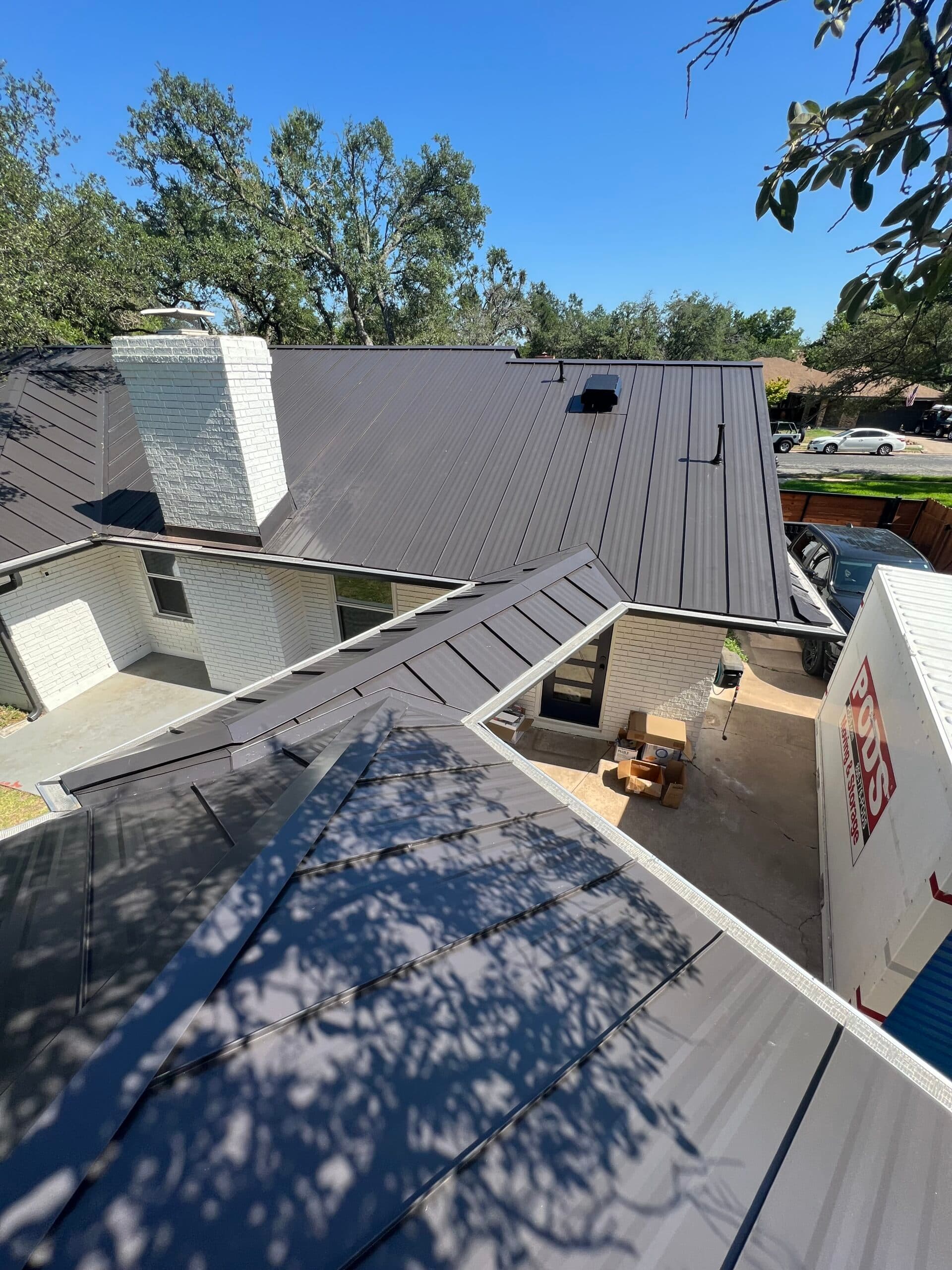
Both standing seam and stone-coated steel are premium metal roofing systems. Both will outlast asphalt shingles by decades. Both hold up in Texas hail and heat. The question is: which one is right for your home?
The answer depends on your home's architecture, your HOA's rules, your budget, and what you're trying to accomplish. This guide gives you a straight comparison — no upselling, no spin.
Side-by-Side Comparison
| Factor | Standing Seam | Stone-Coated Steel |
|---|---|---|
| Cost (installed) | $14–$26/sq ft | $12–$18/sq ft |
| Typical 2,500 sq ft cost | $35,000–$65,000 | $30,000–$45,000 |
| Lifespan | 50–70 years | 50 years |
| Appearance | Modern, linear, industrial/farmhouse | Traditional shingle, tile, or shake |
| HOA approval rate | Variable (50–75%) | Very high (90–95%) |
| Wind rating | 140+ mph | 120+ mph |
| Hail resistance | Class 4 | Class 4 |
| Energy savings | 20–30% cooling reduction | 10–25% cooling reduction |
| Exposed fasteners | None | None (stone-coated panels use hidden clips) |
| Solar panels | Ideal — clamps attach to seams | Possible but less elegant |
| Noise (rain/hail) | Low (with proper underlayment) | Low (stone granules dampen sound) |
| Maintenance | Zero | Minimal (granule check every 10 years) |
| Weight | 1.0–1.5 lbs/sq ft | 1.4–1.7 lbs/sq ft |
| Colors | 20+ PVDF paint colors | 15+ colors with stone granule finishes |
The Key Difference: Appearance
This is where most decisions get made.
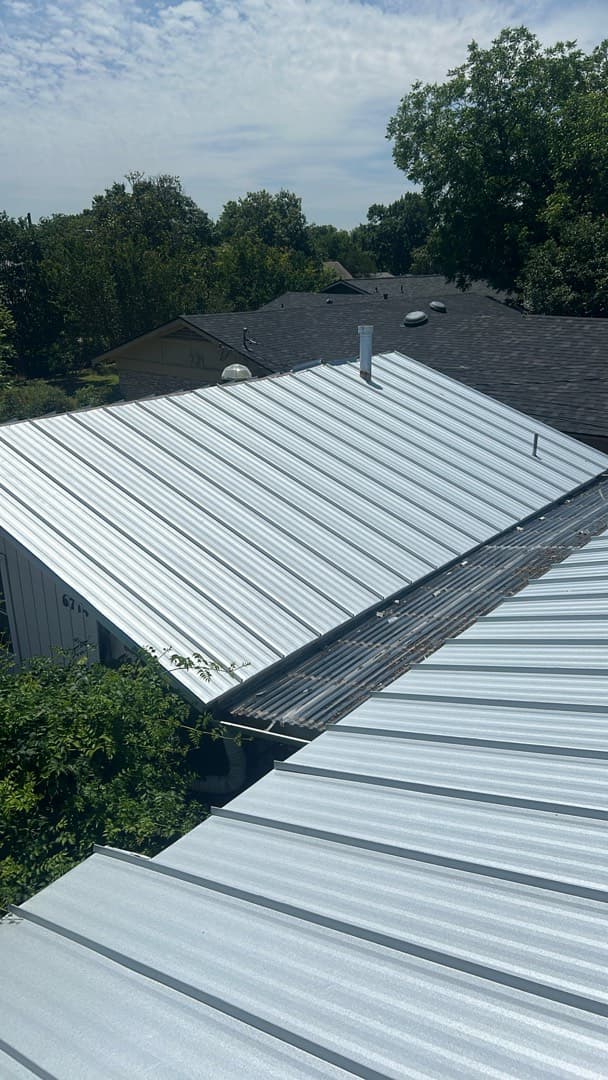
Standing seam has a distinctive look: long, clean, parallel raised ribs running vertically or at the roof pitch. It reads as modern, contemporary, industrial, or farmhouse depending on the color and setting. There is no way to make it look like traditional asphalt shingles.
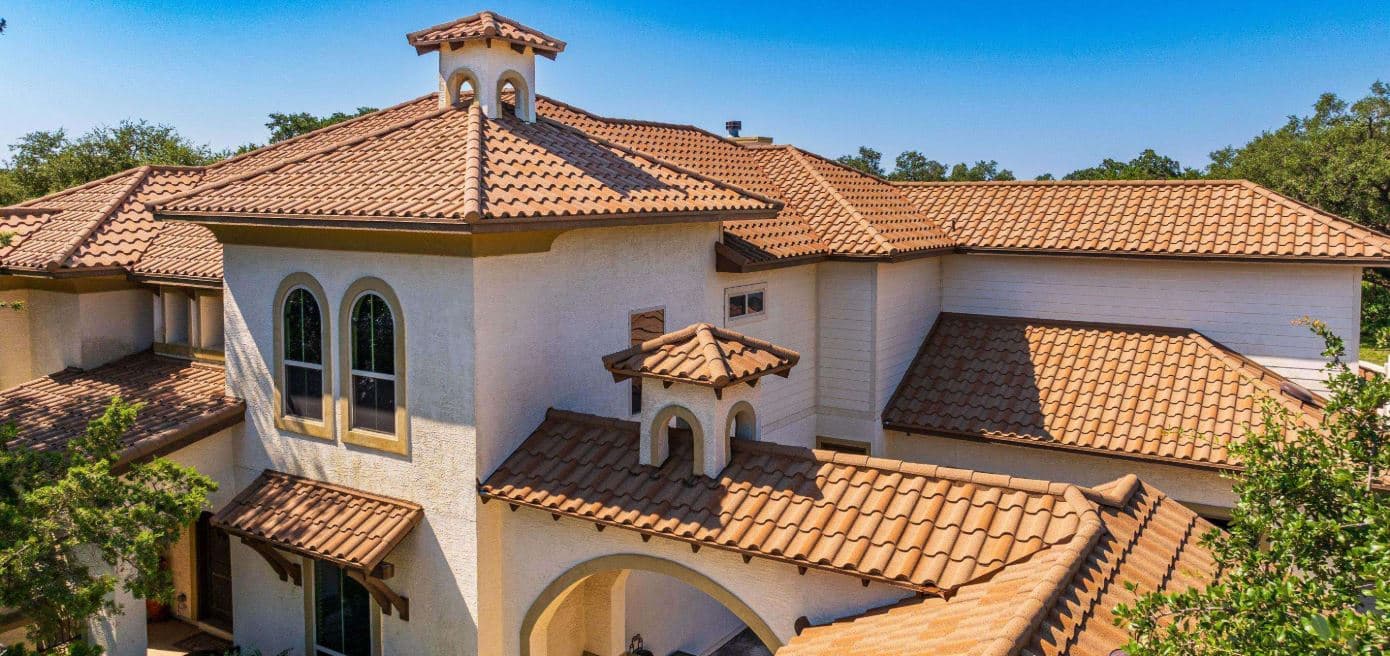
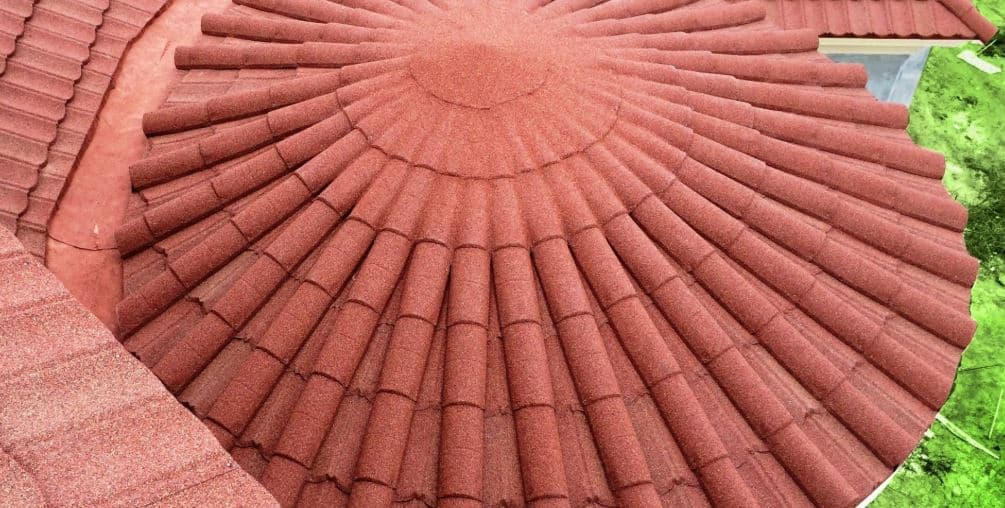
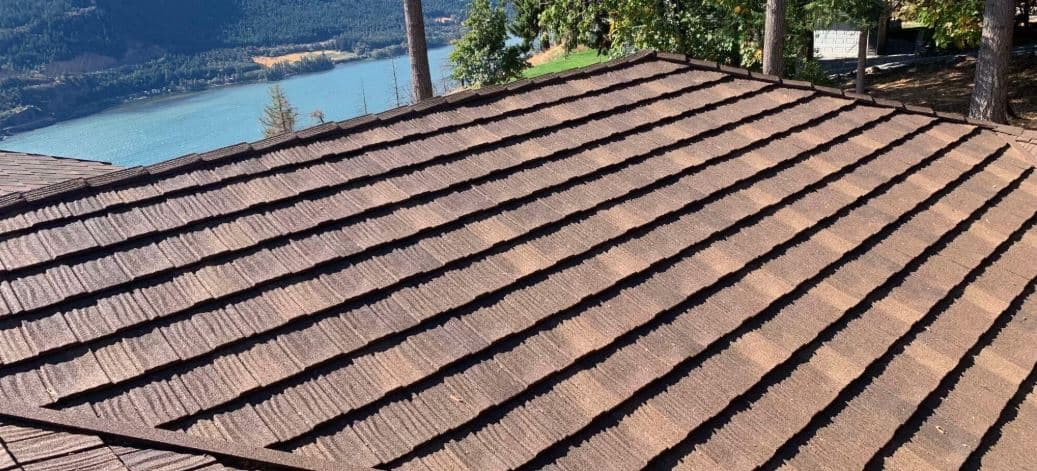
Stone-coated steel uses steel panels coated with stone granules — the same material as asphalt shingles but bonded to metal. It replicates the look of architectural shingles, barrel tile, cedar shake, or slate. Most neighbors walking by cannot tell it's metal.
Bottom line: If your home's architecture suits standing seam (modern, contemporary, farmhouse, or you simply prefer the look), standing seam is the superior system. If you want the long-term benefits of metal but need or prefer a traditional look, stone-coated steel is your path.
HOA Reality in Texas
This is where standing seam loses ground in many Texas subdivisions.
Most established Texas HOAs were written when metal roofing meant agricultural corrugated — they sometimes have blanket restrictions on "metal roofing" that were never updated to account for premium residential metal systems. Even when updated, standing seam's industrial appearance can conflict with architectural character requirements in traditional neighborhoods.
Standing seam HOA approval:
- East Austin, Mueller, modern neighborhoods: Generally permitted
- Contemporary custom homes in Hill Country: Generally permitted
- Established master-planned communities (Teravista, Star Ranch, Steiner Ranch, Circle C): Case-by-case, approval process required
- Traditional neighborhoods with strict CC&Rs: Often declined
Stone-coated steel HOA approval:
- Approved in 90-95% of Texas HOAs regardless of architectural style requirements
- Looks like traditional roofing materials — committees rarely object
- Even strict HOAs like Westlake and Barton Creek typically approve stone-coated steel
If your HOA is uncertain: Request your architectural review committee evaluate both options. In our experience, HOAs that decline standing seam will approve stone-coated steel in nearly all cases. You still get a 50-year metal roof.
Cost Comparison: The Real Numbers
Upfront Installation (2,500 sq ft home)
- Standing seam: $35,000–$65,000
- Stone-coated steel: $30,000–$45,000
- Difference: $5,000–$20,000 premium for standing seam
60-Year Total Cost (Including Replacements)
Neither system needs replacement within a 60-year horizon if properly installed. The comparison shifts to:
- Insurance savings: Standing seam's Class 4 impact rating may earn slightly higher discounts with some carriers due to the superior fastener system
- Energy savings: Standing seam's reflective PVDF coatings typically outperform stone-coated finishes by 5-10% on cooling reduction
- Solar: Standing seam enables clamp-based solar attachment; stone-coated requires penetrating the panels
Over 30 years, the energy and insurance savings difference can be $5,000–$15,000 — partially narrowing the installation cost gap.
Who Should Choose Stone-Coated Steel for Budget Reasons
If your budget is firm at $35,000-$42,000 for a 2,500 sq ft home, stone-coated steel delivers nearly all the same performance benefits at a lower cost. The lifespan and hail resistance differences are marginal for most homeowners. You're not "settling" — stone-coated steel is genuinely excellent.
Hail Performance in Texas: Both Earn Class 4
Texas is hail country, and this is the question most Central Texas homeowners ask first. Both systems earn UL 2218 Class 4 — the highest impact resistance rating available.
In practice:
- Standing seam will dent in large hail. Dents do not affect performance — a dented standing seam roof is still fully watertight.
- Stone-coated steel can lose some granule coating in severe hail, similar to asphalt shingles. However, the steel substrate beneath remains intact and the roof continues functioning normally.
- Both significantly outperform asphalt shingles, which can crack, fracture, and lose enough granules to require replacement after a major hailstorm.
Insurance treatment: Both systems qualify for the same Class 4 impact resistance discounts with Texas carriers — typically 15-40% premium reduction depending on the insurer. Verify with your specific carrier.
Energy Performance in Texas Heat
Both systems are dramatically better than asphalt shingles at reflecting solar heat.
Standing seam with PVDF cool-roof coating:
- Reflects 65-70% of solar radiation
- Energy Star qualified options available
- 20-30% estimated cooling cost reduction for typical Texas homes
Stone-coated steel with reflective stone granule coating:
- Reflects 50-65% of solar radiation
- Energy Star qualified options available
- 10-25% estimated cooling cost reduction
The difference is real but not dramatic for most homes. Both represent a major improvement over dark asphalt, which absorbs up to 90% of solar radiation and dumps that heat into your attic.
Solar Panels: Standing Seam Has a Clear Advantage
If you're planning to add solar — now or in the next 20 years — standing seam is the superior base.
Standing seam + solar: Solar clamps attach directly to the raised seams without drilling through the metal. The roof warranty remains intact. No penetrations = no leak risk. Installation is faster and often cheaper.
Stone-coated steel + solar: Solar mounting requires drilling through the panels to attach to the roof deck. Properly flashed penetrations can maintain waterproofing, but it adds complexity and creates potential failure points. Some stone-coated manufacturers have specific guidance on solar attachment that must be followed for warranty purposes.
If solar is a near-term plan, the math often shifts toward standing seam even at a higher upfront cost.
Weight Considerations
Both systems are much lighter than concrete tile (which runs 9-12 lbs/sq ft), but there is a slight difference:
- Standing seam: 1.0–1.5 lbs/sq ft (varies by gauge)
- Stone-coated steel: 1.4–1.7 lbs/sq ft
For most modern homes built to current code, both are well within structural limits. Older homes or homes with existing weight considerations (attic conversions, room additions) should have a structural assessment if the existing roof is heavy concrete tile being replaced.
Maintenance: Minimal Either Way
This is where both systems shine compared to asphalt.
Standing seam maintenance:
- Annual inspection: Clear debris from valleys and gutters
- Check flashings at penetrations every 5 years
- No granule loss, no lifted tabs, no caulking to replace
- True 50-70 year minimal-maintenance system
Stone-coated steel maintenance:
- Annual inspection: Clear debris, check granule adhesion
- Visual check every 10 years for granule retention in high-traffic hail areas
- Slightly more monitoring than standing seam, but far less than asphalt
Decision Framework
Choose standing seam if:
- Your home is modern, contemporary, farmhouse, or industrial style
- Your HOA doesn't restrict it (or you've confirmed approval)
- You plan to add solar panels
- You want the longest possible lifespan with zero maintenance
- Budget is $40,000+ for a 2,500 sq ft home
Choose stone-coated steel if:
- Your HOA prefers or requires traditional appearance
- Your budget is firm at $30,000–$42,000 for a 2,500 sq ft home
- You want the benefits of metal but prefer a shingle or tile aesthetic
- You're in a traditional neighborhood where standing seam would look out of place
- You want 90-95% HOA approval odds without a fight
Both are far better than asphalt if:
- You're staying in the home long-term (15+ years)
- Your area gets regular hailstorms (most of Central Texas qualifies)
- Your insurance premiums are high enough to benefit from Class 4 discounts
- You're tired of the 15-25 year replacement cycle
Frequently Asked Questions
Q: Can I mix standing seam and stone-coated steel on the same home? A: Technically yes, but it's rarely a good aesthetic choice and most manufacturers won't warranty mixed systems. Pick one system for the full roof.
Q: Which holds up better in a major hailstorm? A: Both achieve Class 4 impact resistance. Standing seam dents; stone-coated may lose some granules. Both continue functioning normally. Asphalt typically requires full replacement after the same storm.
Q: Which is better for a commercial building? A: Standing seam. It's the industry standard for commercial roofing in Texas and dominates in low-slope applications. Stone-coated steel is primarily a residential system.
Q: Which adds more resale value? A: Both add substantial value — a documented premium metal roof is a major selling point. Standing seam may command a slight premium in markets where buyers value modern aesthetics; stone-coated steel may be preferred in traditional markets.
Still deciding? We can walk you through both options on your home — real pricing, HOA considerations, and an honest assessment of which system makes more sense for your situation. Request a free consultation.