Standing seam metal roofing is the most expensive residential roofing system available — and for many Texas homeowners, it's also the smartest long-term investment they'll ever make. But "it costs more" isn't a helpful answer when you're trying to budget.
This guide gives you real Texas pricing, broken down by home size, panel material, and market area, so you know exactly what to expect before you call a single contractor.
Standing Seam Metal Roof Cost Overview (Texas 2026)
Installed cost range: $14–$26 per square foot
| Home Size | Low Estimate | High Estimate | Typical Average |
|---|---|---|---|
| 1,500 sq ft | $21,000 | $39,000 | $28,000 |
| 2,000 sq ft | $28,000 | $52,000 | $38,000 |
| 2,500 sq ft | $35,000 | $65,000 | $47,000 |
| 3,000 sq ft | $42,000 | $78,000 | $57,000 |
| 3,500 sq ft | $49,000 | $91,000 | $67,000 |
These prices include tear-off of one existing layer, deck inspection and minor repairs, premium synthetic underlayment, all panels, trim, flashing, ridge and eave systems, labor, permits, and cleanup.
What You're Paying For: The Concealed Fastener Difference
Before diving into numbers, it helps to understand why standing seam costs more than corrugated or exposed-fastener metal — and why that difference is worth paying.
Exposed fastener metal roofing (R-panel, corrugated) uses screws driven through the metal surface. Every screw is a potential leak point as rubber washers degrade over 10-15 years in Texas heat. Labor is faster and cheaper.
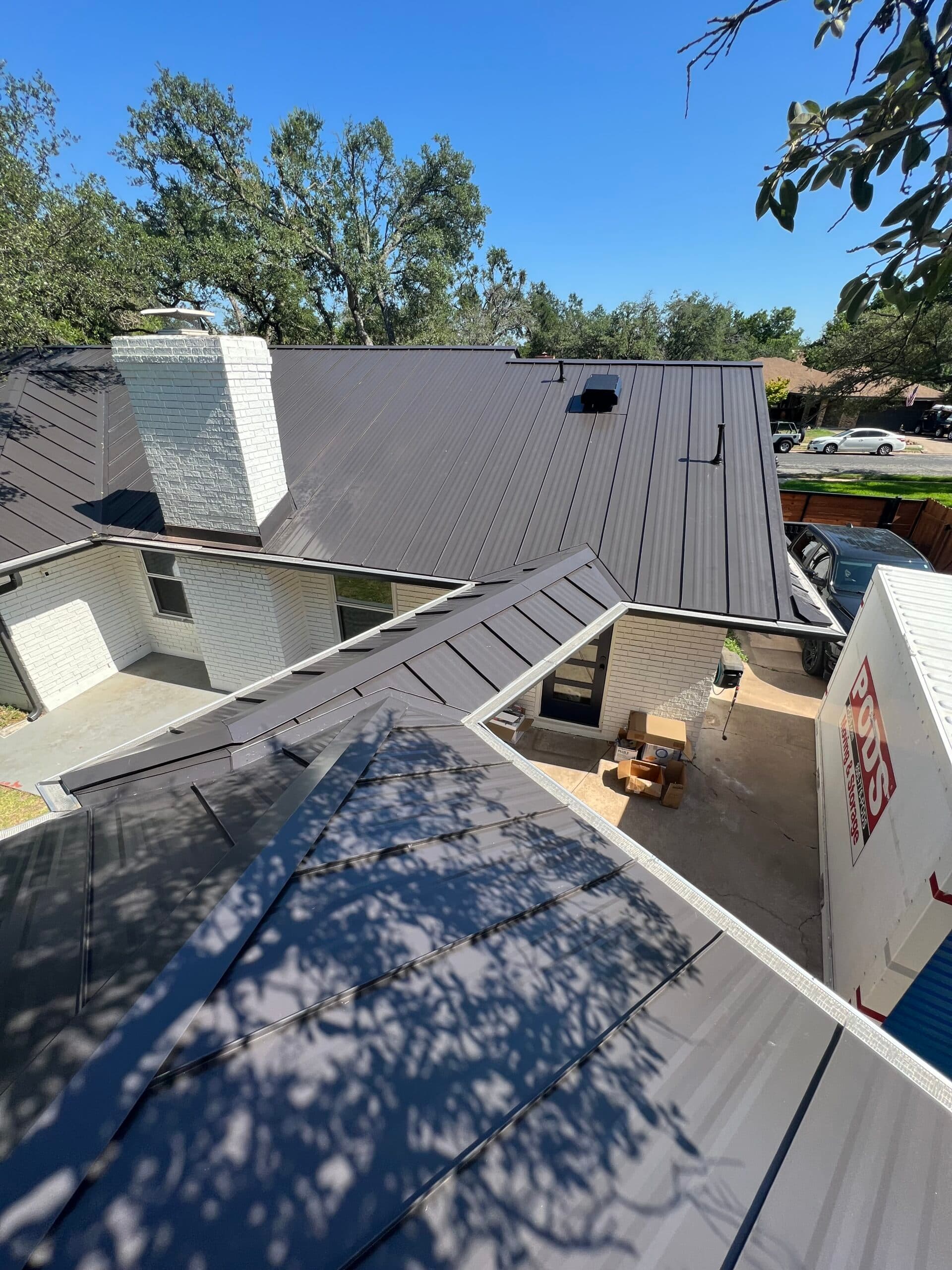
Standing seam uses a clip system hidden under the seam. Panels interlock and snap or mechanically crimp together from the top, with zero screws penetrating the weather surface. There are no exposed fastener points — ever. Combined with floating clips that let panels expand and contract with Texas temperature swings (up to 100°F in a single day), the system stays leak-free for 50-70 years.
That engineering costs more. It's worth it.
Cost by Panel Material
Galvalume Steel (Most Common in Texas)
- Cost range: $14–$20 per sq ft installed
- Lifespan: 40-60 years
- Best for: Most residential and commercial applications
- Why: Aluminum-zinc coating provides excellent corrosion resistance in Texas humidity; accepts PVDF paint finish for color options
Aluminum
- Cost range: $16–$24 per sq ft installed
- Lifespan: 50-70 years
- Best for: Coastal areas (Corpus Christi, Galveston) and high-humidity zones
- Why: Won't rust — even cut edges stay corrosion-free; lighter weight reduces structural load
Steel with PVDF Kynar Paint
- Cost range: $16–$22 per sq ft installed
- Lifespan: 40-60 years with 40-year paint warranty
- Best for: Homeowners prioritizing color selection and curb appeal
- Why: 20+ color options with Kynar 500 coatings that won't chalk or fade over decades
Copper
- Cost range: $30–$50+ per sq ft installed
- Lifespan: 100+ years
- Best for: Historic homes, ultra-premium applications
- Why: The most durable roofing material available; develops natural patina over time
What Drives Cost in Texas
1. Roof Complexity
A simple gable roof installs faster and cheaper than a complex hip-and-valley system. Each valley, dormer, skylight, and chimney adds flashing work and panel cuts.
- Simple gable/shed: Base pricing
- Moderate complexity (1-2 dormers, hip roof): Add 15-25%
- High complexity (multiple dormers, turrets, steep pitch): Add 30-50%
2. Panel Width and Seam Height
- 12" wide panels: More panels, more seams, more labor — higher cost but better thermal performance
- 16"-18" wide panels: Faster to install, lower cost
- 1.5" seam height: Standard for moderate slope residential
- 2"-3" seam height: Required for low-slope commercial; more material, higher cost
3. Mechanically Seamed vs. Snap-Lock
- Snap-lock: Panels click together by hand. Faster installation, lower cost. Best for pitches 3:12 and above.
- Mechanically seamed: A seaming machine rolls and crimps the seam to 180° or 360°. Slower, more expensive, but provides the highest level of watertightness. Required for low-slope (1:12-3:12) applications.
4. Tear-Off and Deck Work
- 1 layer of asphalt: Included in most estimates
- 2+ layers or existing metal: Add $1-$2 per sq ft
- Deck damage (from water intrusion or rot): $2-$6 per sheet of plywood replaced
5. Geographic Market (Texas City Premiums)
| Market | Relative Cost |
|---|---|
| Austin metro (Round Rock, Cedar Park, Georgetown) | Base |
| San Antonio | -5% to base |
| Houston | Base to +5% |
| Dallas/Fort Worth | Base to +5% |
| Waco, Temple, Killeen | -5% to -10% |
| Rural Central Texas | -5% to -10% |
Standing Seam vs. Alternatives: Full Cost Comparison
| Roofing System | Installed Cost (2,500 sq ft) | Lifespan | 60-Year Total Cost* |
|---|---|---|---|
| Standing Seam Metal | $35,000–$65,000 | 50-70 years | $35,000–$65,000 |
| Stone-Coated Steel | $30,000–$45,000 | 50 years | $30,000–$45,000 |
| Class 4 Asphalt Shingles | $18,000–$25,000 | 25-30 years | $36,000–$50,000 |
| Standard Asphalt Shingles | $12,000–$18,000 | 20-25 years | $36,000–$54,000 |
| Concrete Tile | $28,000–$42,000 | 40-50 years | $28,000–$42,000 |
*Includes replacement cycles, disposal costs, and 3% annual cost inflation. Does not include damage repairs or emergency service calls.
Standing seam and stone-coated steel are the only systems where you install it once in a 60-year horizon. Asphalt, installed twice or three times over that same period, often costs more in total.
Energy Savings That Offset the Cost
Texas heat is brutal. A standing seam roof with a cool-roof PVDF finish reflects 65-70% of solar energy versus 5-15% for standard asphalt shingles.
Annual cooling savings estimates for Central Texas:
- 1,500 sq ft home: $300–$500/year
- 2,000 sq ft home: $400–$650/year
- 2,500 sq ft home: $500–$800/year
Over 20 years, that's $10,000–$16,000 in savings for an average Texas home — a meaningful offset against the premium installation cost.
Additional financial benefits:
- Insurance discounts: Many Texas insurers offer 15-40% discounts for Class 4 impact-rated metal roofing. On a $3,000/year homeowners premium, that's $450–$1,200/year in savings.
- Solar panels: Standing seam clamps attach solar panels without drilling through the roof. Eliminates the installation risk that degrades warranties on other systems.
- Resale value: A documented standing seam roof adds $15,000–$40,000 to home resale value in the Austin and San Antonio markets.
Red Flags in Standing Seam Quotes
Too-Low Quotes
Standing seam installed below $12/sq ft in Texas should raise immediate questions. Common cost-cutting shortcuts:
- Using exposed-fastener metal and calling it "standing seam"
- Skipping high-temp underlayment (required for metal — standard felt degrades)
- Using residential snap-lock panels on low-slope commercial applications
- No floating clips (fixed clips cause oil-canning and stress cracks)
- Unlicensed crews without manufacturer certification
What a Legitimate Quote Includes
✅ Panel gauge and manufacturer specified
✅ Underlayment type specified (peel-and-stick or premium synthetic)
✅ Clip type — fixed vs. floating — specified
✅ Seam type — snap-lock vs. mechanically seamed — specified
✅ Warranty documentation — manufacturer + workmanship
✅ Licensed and insured contractor (Texas requires roofing contractor registration)
Financing Standing Seam in Texas
Most homeowners finance the premium cost. Common options:
Manufacturer financing (0% APR promotions): GreenSky, Mosaic, and similar programs offer 12-18 month same-as-cash or longer-term financing through roofing contractors.
Home equity/HELOC: Low interest rates, interest may be tax-deductible.
Insurance proceeds + supplement: If standing seam is replacing a storm-damaged roof, your adjuster may cover the full replacement in kind if standing seam is the current roofing system. If upgrading from shingles after a claim, insurance covers ACV/RCV for shingles and you pay the upgrade difference.
Personal loan: Useful for amounts under $30,000 with good credit.
We offer financing options for qualified homeowners — ask about current programs during your free estimate.
Is Standing Seam Worth It for Your Texas Home?
Standing seam makes the most sense when:
- You plan to stay in the home 15+ years
- You want the last roof replacement you'll ever need
- You have a modern, farmhouse, or commercial-style home where standing seam fits aesthetically
- You want solar panels without compromising the roof
- Your insurance premium is high enough that the Class 4 discount pays dividends
Stone-coated steel may be a better fit when:
- Your HOA prohibits the industrial look of standing seam
- Your budget is firm under $35,000 for a 2,500 sq ft home
- You prefer a traditional shingle or tile appearance
Asphalt (Class 4) makes sense when:
- Budget is the primary constraint
- Home is older and you're not planning to stay long-term
- HOA mandates asphalt appearance
Frequently Asked Questions
Q: How long does standing seam installation take in Texas? A: Most residential projects take 3-5 days. Complex homes with multiple dormers or steep pitches can run 7-10 days. Commercial projects vary widely.
Q: Do I need a permit for standing seam in Texas? A: Yes. All roofing replacements in incorporated cities require a permit. We pull all permits and schedule inspections.
Q: Can I install standing seam over my existing shingles? A: Texas building code generally allows one re-cover (installing over existing shingles), but standing seam manufacturers typically require a clean deck for warranty validity. We recommend full tear-off.
Q: Does standing seam hold up against Texas hail? A: Yes. Standing seam earns Class 4 impact resistance — the highest rating available. It will dent in severe hailstorms but rarely fails structurally. Cosmetic denting from hail is typically covered under insurance claims and can be addressed without full replacement.
Q: How loud is standing seam in rain or hail? A: With proper underlayment and insulation, noise levels are comparable to asphalt shingles. Without insulation (open-frame commercial buildings), metal roofing is noticeably louder.
Ready to get a real number for your home? Request a free standing seam estimate and we'll measure your roof, specify the right system, and give you a detailed written proposal — no pressure, no obligation.