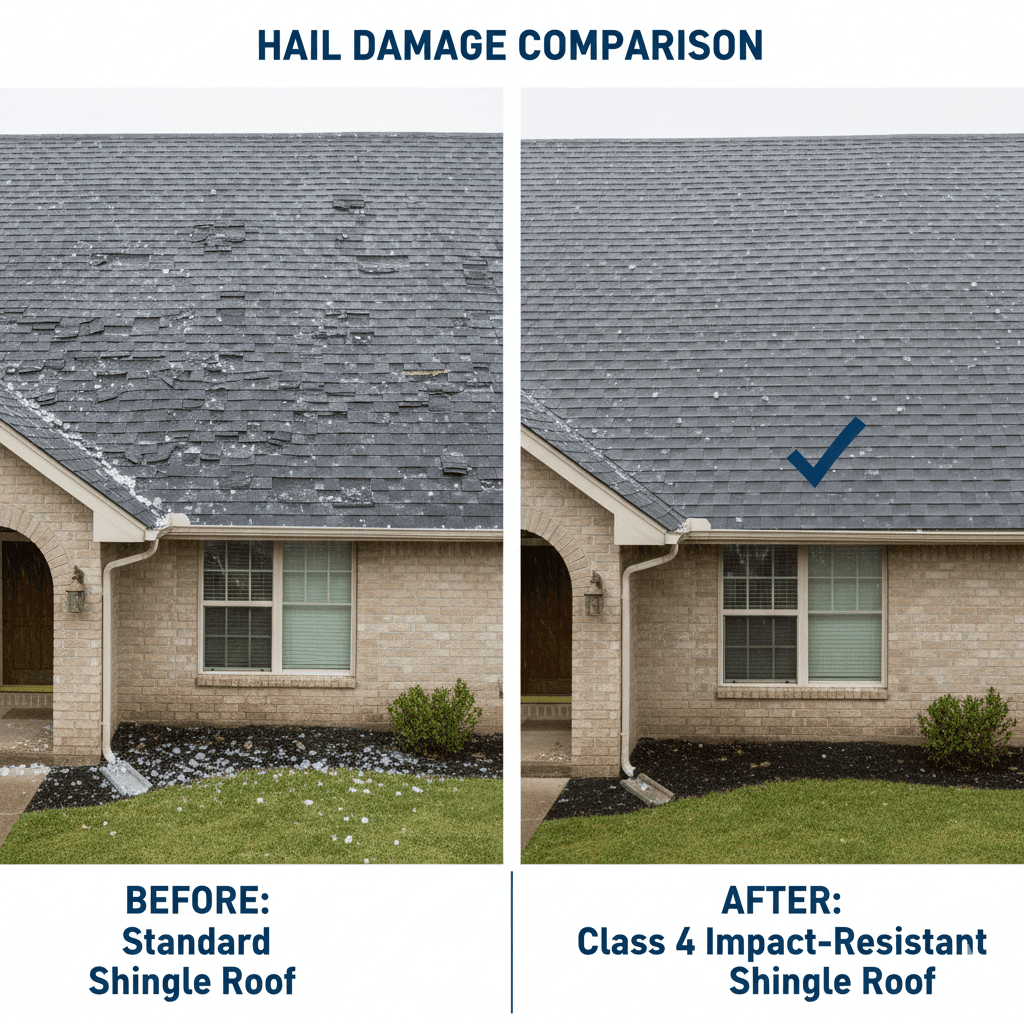
On the evening of Saturday, April 18, 2026, a severe thunderstorm dropped 1-inch hail across a wide swath of Williamson County — directly over Round Rock and Georgetown neighborhoods. If you live in the area near Westinghouse Road, FM 1460, SH 130, or Brushy Creek, your roof was in the storm's path.
This post covers exactly what happened, what 1-inch hail does to your shingles, how to document the damage properly, and the steps to take to protect your home and insurance claim.
Need a free roof inspection right now? Call us at (512) 763-5277 — we're local and already inspecting homes in your neighborhood.
The Storm: What the Official Reports Say
This isn't speculation — the damage is confirmed by federal storm reports.
The NOAA Storm Prediction Center logged two official hail reports in Williamson County from this event:
- Brushy Creek area (2 miles west): 1.00" hail confirmed via photo with ruler, reported to NWS Austin. (Time: approximately 7:47 PM CDT)
- 4 SE Georgetown / Round Rock corridor: "Numerous reports of pea to quarter-size hail across a swath between Georgetown and Round Rock including communities near Westinghouse Rd, FM 1460, and SH 130." (Time: approximately 8:02 PM CDT)
Source: NOAA SPC Storm Reports — April 18, 2026, issued by the NWS Austin/San Antonio Weather Forecast Office (EWX).
If your home falls anywhere in the Round Rock–Georgetown corridor — including Teravista, Avery Ranch, Berry Creek, Sun City, Wolf Ranch, or neighborhoods off Westinghouse and FM 1460 — you should get a professional inspection before filing or dismissing a claim.
What Does 1-Inch Hail Do to Your Roof?
One inch. That's about the size of a quarter coin — and it causes more damage than most homeowners realize. Here's why:
Granule Loss: The Silent Killer
Asphalt shingles are coated with granules (crushed mineral aggregate) that do three critical jobs:
- UV protection — granules block the sun from degrading the asphalt below
- Fire resistance — they form a protective barrier
- Water shedding — they help channel water off the surface
When 1" hail strikes a shingle at 50–70 mph (typical terminal velocity), it blasts granules off in a circular impact pattern. You may not see visible cracks from the ground — but those granule-loss zones accelerate aging by 5–10 years per impact.
Look in your gutters: if they're full of dark, sand-like granules after Saturday's storm, that's your roof's protective layer washing away.
Bruising and Mat Fractures
Beneath those granules is an asphalt-fiberglass mat. A direct 1" hail strike can fracture or bruise that mat without breaking through the surface. This is called a "functional loss" — the shingle is no longer performing as designed, even if it looks intact from 20 feet below.
Insurance adjusters are trained to test for this with a chalk grid and physical pressure. An experienced roofing contractor will identify it the same way.
Seal Strip Damage
Modern shingles have a self-sealing adhesive strip that bonds shingles together and prevents wind uplift. High-velocity hail impact — especially repeated strikes — can break that seal, leaving shingles vulnerable to blow-off in the next storm.
What 1" Hail Does NOT Do (Usually)
To set expectations honestly: 1-inch hail typically won't punch visible holes through standard 3-tab or architectural shingles. It also may not crack metal flashing on first impact. The damage is often cumulative and invisible from street level — which is exactly why insurance companies send trained adjusters, and why you need a contractor on your side who documents it correctly.
How to Document Your Hail Damage (Do This Today)
The clock is running. Most Texas homeowner insurance policies require you to report damage within a reasonable time — and adjusters use weather data to verify storm dates. The April 18 NWS report is your timestamp. Here's how to document before you call your insurer:
Step 1: Check Your Gutters and Downspouts
Go outside right now and look in your gutters. Take a photo of:
- Granule accumulation (dark, sand-like material)
- Dented gutter edges — hail frequently dents aluminum gutters, creating visible proof
- Downspout dents — same evidence on vertical surfaces
Gutter dents are among the strongest evidence in an insurance claim because they're verifiable, dateable, and impossible to fake.
Step 2: Check Soft Metal Surfaces
Before getting on the roof, inspect:
- AC condenser fins — look for fresh dents (pre-existing dents will have oxidation; new ones won't)
- Garage door panels — fresh dings without paint flaking
- Window screens and frames — hail tears screen mesh and dents aluminum frames
- Mailbox top — surprisingly useful hail evidence
- Painted wood fence caps or deck rails
Photograph everything with your phone. These are "collateral confirmation" items adjusters use to verify hail size and intensity.
Step 3: Do a Ground-Level Roof Survey
Do not get on the roof yourself. This is important — both for your safety and your claim. Instead, from the ground:
- Walk all four sides of the house and look for missing shingles or obvious damage
- Use binoculars or zoom in with your phone camera to look for dark circular impact marks or missing granule areas
- Look at ridge caps (the peak of your roof) — these take direct hits and are often the most visually obvious
- Check your chimney flashing and pipe boots — metal components show dents clearly
Step 4: Video Walkthrough
Record a continuous video walkthrough of your entire property, narrating what you see: "This is my backyard at [address], April 20, 2026 — you can see dents in the AC unit cover here, and granules in this gutter section..."
Video timestamps are timestamped by your phone automatically. This video, combined with the official April 18 NWS storm report, creates a clear timeline for your adjuster.
Step 5: Document Neighbors' Damage
If your neighbors have visible damage (dents, missing shingles, debris), photograph their property from the street. Widespread damage across multiple homes in a cluster strengthens every individual claim.
Filing Your Insurance Claim: Texas-Specific Steps
1. Call Your Insurance Company (Or File Online) Within 48–72 Hours
You've already documented. Now call and open the claim. Key things to say:
- "I experienced hail damage on April 18, 2026 from a confirmed NWS storm in Williamson County, TX."
- Request an adjuster inspection
- Ask for your claim number immediately
2. Get a Contractor Inspection BEFORE the Adjuster Arrives
This is the step most homeowners skip — and it costs them thousands. A licensed roofing contractor who inspects your roof before the adjuster creates an independent damage report. If the adjuster misses items (it happens), your contractor can supplement the claim with documentation you already have.
We provide free post-storm inspections to Round Rock and Georgetown homeowners — schedule yours here or call (512) 763-5277.
3. Understand Your ACV vs. RCV Policy
Texas homeowners policies typically fall into two categories:
- ACV (Actual Cash Value): Pays depreciated value of your roof. A 15-year-old roof might pay very little.
- RCV (Replacement Cost Value): Pays to replace your roof with like kind and quality. This is what you want.
Check your declarations page before the adjuster arrives. If you're on ACV and your roof is older, you may have upgrade options — ask your agent.
4. Do Not Let Storm Chasers Sign Your Rights Away
After a major hail event, out-of-town "storm chasers" flood neighborhoods offering free inspections and asking you to sign an Assignment of Benefits (AOB) or "direction to pay" form. These contracts transfer your insurance rights to the contractor — removing your ability to negotiate or dispute the claim.
Work only with licensed Texas contractors who provide a written estimate and let you maintain control of your claim. Ripple Roofing is locally based in Round Rock — we're not going anywhere after the job is done.
Neighborhoods Most Likely Affected
Based on the NWS storm track (Westinghouse Rd / FM 1460 / SH 130 corridor, Brushy Creek to Georgetown SE), these areas have the highest probability of damage:
Round Rock:
- Teravista
- Forest Creek
- Brushy Creek neighborhoods (near 620/45)
- Old Settlers area
- Highlands at Mayfield Ranch
Georgetown:
- Wolf Ranch
- Morningstar
- Serenada
- Berry Creek
- Sun City neighborhoods (eastern sections)
- Terrain / Georgetown Village
If you're in any of these subdivisions, schedule an inspection even if you don't see obvious exterior damage. Remember: the most costly hail damage is often invisible from the ground.
Why Act in the Next 7–10 Days?
-
Your policy's "timely reporting" clause. Texas courts have upheld claim denials when homeowners waited months to report. The official April 18 storm report is on the record today.
-
Contractor availability. After a confirmed hail event, local roofers fill up fast. The worst outcome is waiting 6 weeks, getting a second storm, and having an adjuster argue the damage is from the newer event.
-
Water intrusion. Cracked or granule-depleted shingles allow moisture to enter roof decking. 30 days of Texas spring rain accelerates rot, mold, and structural damage — all of which may not be covered once they're attributed to delayed maintenance rather than storm damage.
Frequently Asked Questions
Is 1-inch hail really worth filing a claim over? Often yes — while 1" hail rarely punches visible holes, it causes granule loss and mat bruising that accelerates aging by years and qualifies as a "functional loss" under most policies. Don't dismiss it just because there's no obvious hole or crack.
How do I know if my specific address was in the storm's path? Check the confirmed NWS Storm Prediction Center report for the exact date and location, then compare it to your address relative to the reported impact zones. Even homes near, but not squarely inside, a reported hail location can still have damage worth a professional look.
What's the difference between a contractor inspection and the insurance adjuster's inspection? The adjuster works for the insurance company and determines what they'll pay; a contractor inspection before the adjuster arrives creates independent documentation you control, which can be used to supplement the claim if the adjuster misses something.
Should I sign anything a contractor offers after this storm? Not an Assignment of Benefits (AOB) or "direction to pay" form from a door-knocking contractor you don't know — these transfer your insurance rights away from you. Work with a licensed, locally based contractor who provides a written estimate and lets you keep control of your claim.
Ripple Roofing: Your Local Round Rock & Georgetown Team
We know the Round Rock and Georgetown neighborhoods, the insurance carriers active in this area, and exactly how to document hail damage in a way that holds up through the claims process.
- Free post-storm inspection — no obligation, no pressure
- Insurance claim assistance — we work directly with your adjuster
- CertainTeed ShingleMaster Premier certified — the highest installer rating available
- Licensed & insured in Texas
Schedule Your Free Inspection →
Or call us directly: (512) 763-5277
Storm data sourced from the NOAA Storm Prediction Center preliminary storm reports for April 18, 2026, issued by the National Weather Service Austin/San Antonio (WFO EWX). All reports are preliminary.