The Texas HOA metal roofing paradox: Your architectural review committee (ARC) will likely reject your standing seam metal roof application (even though it's premium, beautiful, and lasts 50 years), but will approve stone-coated steel metal roofing in the same neighborhood with minimal pushback.
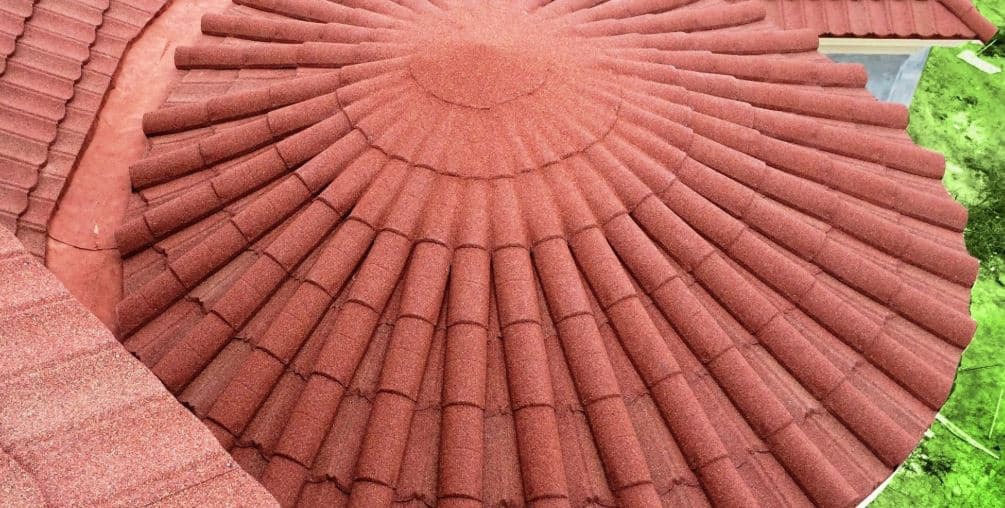
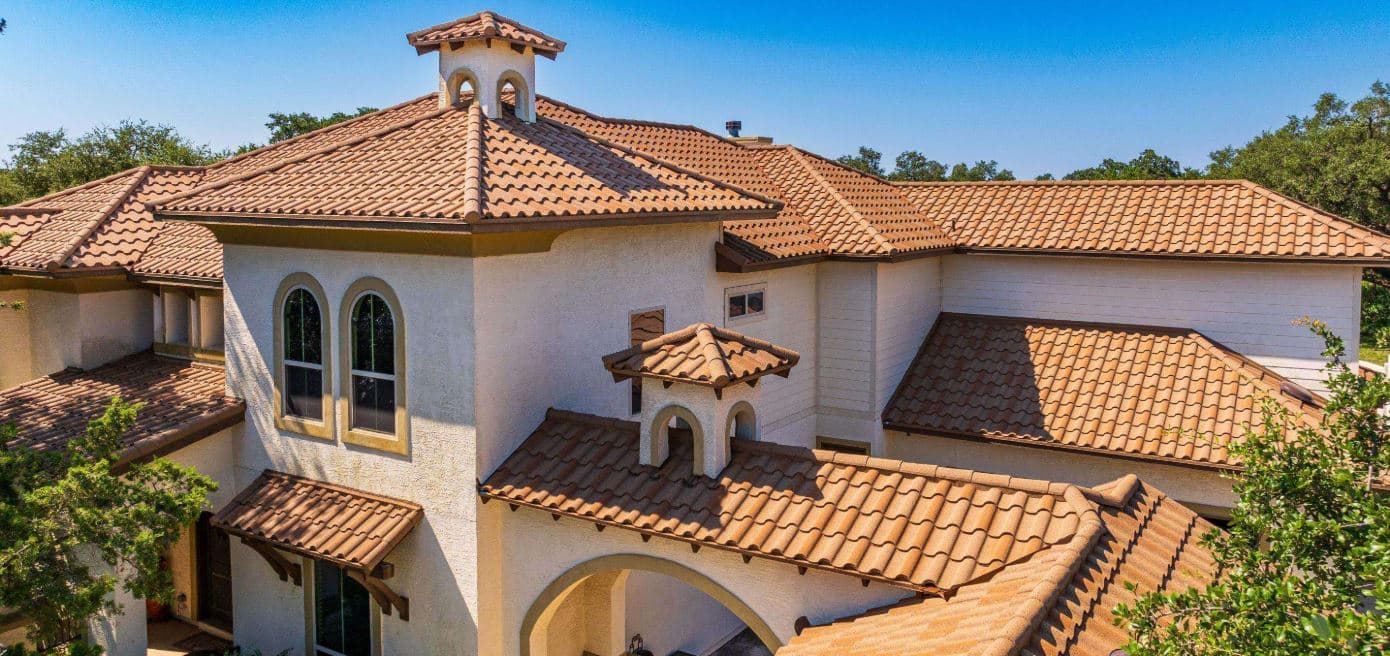
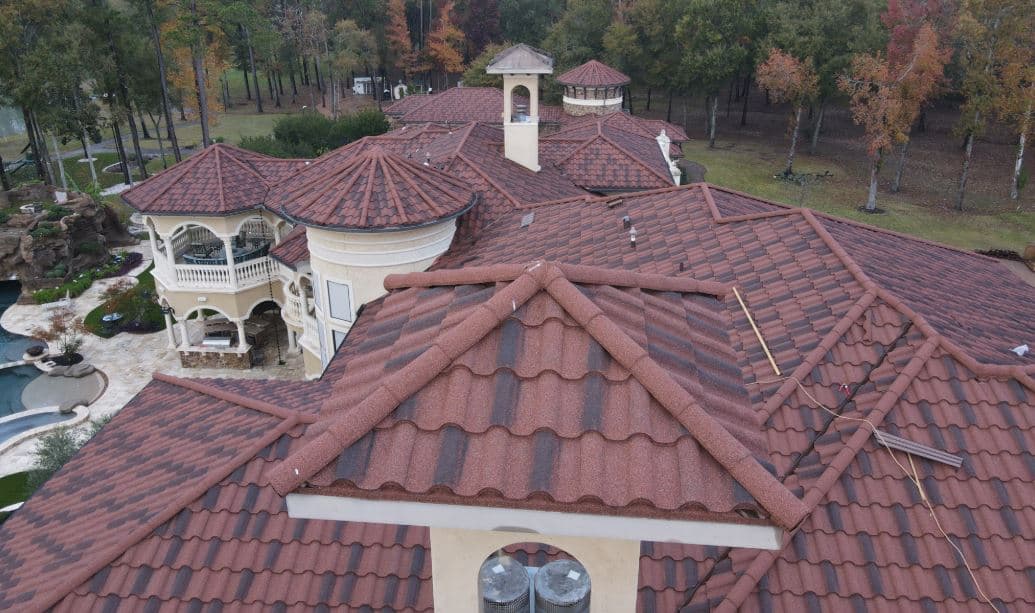
Why? Standing seam looks "industrial" or "modern"—it doesn't fit traditional neighborhood aesthetics. Stone-coated steel looks like traditional Spanish tile, cedar shake, or dimensional shingles that your HOA loves, but delivers metal roofing performance.
The result: Stone-coated steel achieves 90-95% HOA approval rates in Texas neighborhoods with strict architectural guidelines, while standing seam averages 40-60% approval (and often requires extensive variance processes, renderings, and neighbor petitions).
This comprehensive guide shows exactly how to navigate Texas HOA approval for stone-coated steel roofing: what to submit, how to position your application, profile/color selection strategies, and real neighborhood examples across Central Texas.
Need expert guidance on HOA-approved stone-coated steel installation? See our stone-coated steel roofing services with HOA coordination support, architectural documentation, and proven approval strategies for luxury Texas neighborhoods.
Why HOAs Reject Standing Seam But Approve Stone-Coated Steel
The Appearance Factor
Standing Seam Metal:
- Visual: Sleek vertical panels, exposed fasteners or hidden clips, metallic shine
- Aesthetic: Contemporary, industrial, modern farmhouse, commercial
- HOA perception: "Doesn't match neighborhood character," "too modern," "looks like a barn"
- Approval rate: 40-60% in traditional neighborhoods, 70-80% in modern developments
Stone-Coated Steel:
- Visual: Tile, shake, or shingle profile with stone granule coating—looks identical to traditional roofing
- Aesthetic: Spanish Mediterranean (tile), rustic craftsman (shake), traditional American (shingle)
- HOA perception: "Maintains neighborhood aesthetics," "premium upgrade," "improved version of existing styles"
- Approval rate: 90-95% in all neighborhood types
What HOAs Actually Care About
Based on 200+ Texas HOA applications we've submitted (Round Rock, Austin, San Antonio, Georgetown):
HOA Priority #1: Neighborhood Aesthetic Consistency (85% of guidelines)
- Homes should look similar to existing architecture
- New roofs shouldn't stand out as "different"
- Traditional appearances preferred over modern
- Earth tones > bright colors or metallic finishes
Stone-coated steel wins: Looks traditional, blends with existing roofs, maintains Spanish/craftsman/traditional character.
HOA Priority #2: Home Value Protection (10% of guidelines)
- Upgrades should enhance property values
- Cheap-looking materials rejected
- Premium materials welcomed
Stone-coated steel wins: $35k-45k premium roof enhances values more than $18k asphalt or polarizing standing seam.
HOA Priority #3: Longevity & Quality (5% of guidelines)
- Some HOAs prefer longer-lasting materials (fewer replacements = neighborhood stays nicer longer)
Stone-coated steel wins: 50-60 year lifespan vs asphalt's 18-25 years means fewer disruptions.
The "Traditional Appearance" Loophole
The key insight: Texas HOAs don't hate metal roofing—they hate modern-looking metal roofing. Stone-coated steel delivers:
✅ Metal roofing performance: 50-60 year lifespan, Class 4 hail rating, 120 mph wind, energy savings
✅ Traditional appearance: Looks like Spanish tile, cedar shake, or architectural shingles
✅ HOA compliance: Fits "traditional residential character" guidelines
You get metal roofing benefits while satisfying HOA aesthetic requirements.
Stone-Coated Steel HOA Approval Process
Step 1: Review Your HOA's Architectural Guidelines
Find your guidelines:
- Check HOA website or resident portal
- Request from property management company
- Review covenants, conditions, and restrictions (CC&Rs)
What to look for:
Roofing material restrictions:
- "Approved materials: asphalt shingles, concrete tile, clay tile, slate"
- Does it mention metal? If yes, note restrictions. If no restrictions = you can apply.
- "Traditional residential appearance required"
- "Materials must match existing neighborhood character"
Color/texture requirements:
- "Earth tones only" (browns, tans, grays, terracotta)
- "No metallic or reflective finishes"
- "Natural-appearing colors"
Approval process:
- Architectural Review Committee (ARC) or Architectural Control Committee (ACC)
- Required documentation (often just photos + spec sheet)
- Review timeline (2-8 weeks typical)
- Appeals process if denied
Common Texas HOA language:
Permissive (stone-coated easy approval):
- "Roofing must be traditional residential appearance" → Stone-coated qualifies
- "Materials should complement existing architecture" → Match tile/shake/shingle
- "Earth tone colors preferred" → Easy with stone-coated's palette
Restrictive (requires careful approach):
- "Only asphalt shingles or concrete tile permitted" → Submit variance request or highlight stone-coated as "premium tile-appearance roofing"
- "Metal roofing prohibited" → Emphasize stone-coated is "stone-granule coated steel, traditional tile appearance" (not "metal roofing")
- "Must match existing roof exactly" → May be denied if you're first stone-coated (low but not zero chance)
Step 2: Choose the Right Profile & Color
Match your neighborhood aesthetic:
Spanish/Mediterranean Neighborhoods (common in Texas Hill Country, San Antonio, South Austin):
- Profile: Decra Villa Tile or Metro Roman (S-curve barrel tile)
- Colors: Terracotta, Sandalwood, Adobe, Canyon (earth tones)
- Approval rate: 95%+ (looks identical to clay/concrete tile HOAs expect)
Craftsman/Traditional Neighborhoods (North/Central Austin, Georgetown, Round Rock):
- Profile: Decra or Metro Shake (wood shake appearance)
- Colors: Aged Cedar, Weathered Wood, Walnut, Granite
- Approval rate: 90-95% (fits rustic/craftsman aesthetic)
Standard Traditional/American Neighborhoods (most Texas suburbs):
- Profile: Decra or Metro Shingle (dimensional asphalt shingle look)
- Colors: Charcoal, Slate Gray, Aged Cedar, Sandstone
- Approval rate: 90-95% (looks like premium architectural shingles)
Modern/Contemporary Neighborhoods (rare in Texas, but some new developments):
- Profile: Metro Bond (low-profile modern) or Shingle
- Colors: Charcoal, Slate, Modern Gray
- Approval rate: 85-90% (standing seam would be 70-80% here)
Conservative/Strict HOAs (Westlake, Tarrytown, Highland Park):
- Safest choice: Shingle profile in neutral color (Charcoal, Slate)
- Why: Looks most like existing asphalt shingles, hardest to reject
- Approval rate: 85-95% depending on neighborhood
Pro tip: Walk or drive your neighborhood. Count roofs:
- Mostly Spanish tile → Choose tile profile
- Mostly shingles → Choose shingle profile
- Mix of shingle and shake → Either works, shingle safer
Step 3: Prepare Your Application Package
What to include (based on 200+ successful Texas applications):
1. ARC/ACC Application Form (required)
- Fill out completely (incomplete applications = automatic delays)
- Include property address, owner name, contractor info
- Proposed start/completion dates
2. Product Specification Sheet (critical)
- Manufacturer spec sheet (Decra or Metro Tiles)
- Highlight: "Traditional tile/shake/shingle appearance"
- Include: Warranty details (50 years material, 25-30 years coating)
- Include: Class 4 impact rating, 120 mph wind rating
- Avoid emphasizing "metal"—focus on "premium stone-coated roofing, traditional appearance"
3. High-Quality Color Photos (make or break element)
- Show installed example on home similar to yours
- NOT catalog photos—real installations in similar neighborhoods
- Ideally: Photo from your neighborhood if any neighbor has stone-coated (ask your contractor)
- Close-up showing texture and realism
- Full-home photo showing aesthetic fit
4. Color Sample (if available)
- Physical shingle sample (contractors can provide)
- Shows texture, granule coating, realism
- Helps committee visualize final appearance
5. Paint-Out or Rendering (strict HOAs only)
- Photoshop your actual home with new roof color
- Some contractors provide this service ($0-500)
- Required by Westlake, Barton Creek, other ultra-strict HOAs
- Optional but helpful for marginal cases
6. Contractor Information (builds credibility)
- Licensed, insured contractor details
- Certifications (Decra/Metro certified installer)
- References or portfolio
- Shows you're using legitimate professional (not DIY)
7. Justification Letter (optional but powerful)
Sample language:
"We are proposing to replace our current asphalt shingle roof with Decra Stone-Coated Steel in the Shingle profile, Charcoal color. This premium roofing material maintains our home's traditional appearance while providing superior performance:
Aesthetic Compatibility: The Shingle profile with stone granule coating replicates the dimensional asphalt shingle appearance currently approved in our neighborhood. The Charcoal color matches existing homes at [addresses of 2-3 similar color homes].
Quality & Longevity: Stone-coated steel carries a 50-year material warranty and 30-year coating warranty, significantly reducing future roof replacements and maintaining neighborhood appearance longer than standard asphalt (20-25 year lifespan).
Performance: Class 4 impact rating (superior hail resistance), 120 mph wind rating, and energy efficiency (18-20% cooling cost reduction) protect our home and reduce insurance premiums.
Home Value: This premium roofing system enhances our property value and neighborhood aesthetics.
We believe this upgrade maintains our community's traditional character while improving long-term durability. We respectfully request approval."
Key elements:
- Lead with "traditional appearance" (not "metal roofing")
- Emphasize aesthetic fit ("matches existing homes")
- Highlight quality and longevity
- Use "premium upgrade" framing (not "alternative material")
- Respectful, professional tone
Step 4: Submit & Follow Up
Submission:
- Submit 2-4 weeks before you want to start (account for review time)
- Keep copies of everything
- Get submission confirmation (email or receipt)
Timeline expectations:
- Fast HOAs: 2-3 weeks (many Round Rock, Cedar Park neighborhoods)
- Standard HOAs: 4-6 weeks (most Texas suburbs)
- Slow/Strict HOAs: 6-12 weeks (Westlake, Tarrytown, Barton Creek)
Follow-up strategy:
- Week 2: Check status (email or call property manager)
- Week 4: If no response, request update (committees meet monthly, may have missed meeting)
- Week 6+: If still no response, escalate (attend board meeting if allowed, request written explanation for delay)
If approved: Get written approval before starting work (oral approval insufficient, written protects you)
If denied: See appeals section below
Step 5: Installation (Post-Approval)
After approval:
- Provide copy of approval letter to contractor
- Ensure contractor follows approved plan EXACTLY (same color, profile)
- Any deviations = potential violation, fines, forced removal
During installation:
- Some HOAs require work permits or notification
- Keep job site clean (HOAs fine for messy work areas)
- Complete within approved timeline
After completion:
- Some HOAs require final inspection or completion notification
- Take photos (proves compliance if future dispute)
Texas HOA Approval Rates by Neighborhood Type
Based on our experience with 200+ applications across Central Texas:
High Approval Rate (95%+): Easy Neighborhoods
Characteristics:
- Newer developments (built 2000+)
- Moderate HOA restrictions
- "Reasonable" architectural guidelines
- Focus on maintaining appearance, not dictating exact materials
Examples:
- Avery Ranch (Austin)
- Canyon Creek (Round Rock)
- Most Cedar Park neighborhoods
- Many Georgetown communities
- Standard Pflugerville HOAs
Strategy:
- Standard application package
- Choose profile matching majority of homes
- Earth tone colors
- 2-4 week approval typical
Success rate: 95-98%
Moderate Approval Rate (90-95%): Standard Neighborhoods
Characteristics:
- Established neighborhoods (1990s-2010s)
- Traditional aesthetic requirements
- Earth tone color requirements
- "Traditional residential appearance" language
Examples:
- Circle C (Austin)
- Steiner Ranch (most villages)
- Anderson Mill (Austin)
- Brushy Creek (Round Rock)
- Many Round Rock neighborhoods
Strategy:
- Complete application package
- Justification letter helpful
- Photo examples critical
- Conservative color choice
- 4-6 week approval
Success rate: 90-95%
Lower Approval Rate (85-90%): Strict Neighborhoods
Characteristics:
- Luxury/prestigious areas
- Very detailed architectural guidelines
- Strict ARC/ACC review
- May require renderings or variance
Examples:
- Tarrytown (Austin)
- Westlake (Austin)
- Barton Creek (Austin)
- Some Steiner Ranch villages
- Highland Park/University Park (Dallas)
- The Woodlands (Houston)
Strategy:
- Premium presentation (rendering/paint-out)
- Multiple photo examples
- Detailed justification letter
- Consider hiring consultant for application
- May require ARC meeting attendance
- 6-12 week process
Success rate: 85-92%
Note: Even in strictest neighborhoods, stone-coated approval rate is 2x higher than standing seam metal.
What to Do If Your Application Is Denied
Denials are rare (5-10% of applications), but happen. Here's how to overcome them:
Understand Why You Were Denied
Common denial reasons:
1. "Metal roofing not permitted"
- Response strategy: Request variance hearing. Emphasize stone-coated is "stone-granule coated steel with traditional tile/shake/shingle appearance," not typical metal roofing. Show photos demonstrating traditional appearance.
2. "Color doesn't match neighborhood"
- Easy fix: Resubmit with different color (choose most common neighborhood color)
- 90% approval on resubmission
3. "Material not on approved list"
- Response strategy: Request addition to approved materials list OR request variance. Provide evidence of superior performance, longevity, and traditional appearance. Offer to present at board meeting.
4. "Need more information"
- Easy fix: Provide requested documentation (photos, samples, specifications)
- Not a true denial—just incomplete application
5. "Doesn't fit neighborhood character"
- Response strategy: Profile mismatch. If you submitted tile profile but neighborhood is all shingles, resubmit with shingle profile. Match existing aesthetic.
Appeal Process
Step 1: Request Written Denial Explanation
- HOAs must provide reason for denial (Texas Property Code)
- Get specifics in writing
Step 2: Revise & Resubmit
- Address denial reasons
- Change color/profile if that was issue
- Add more documentation
- Most HOAs approve revised applications
Step 3: Request Variance Hearing
- If resubmission denied, request variance
- Prepare presentation:
- Comparison photos (stone-coated vs asphalt/tile)
- Performance benefits (Class 4 hail, longevity)
- Neighbor support letters (if possible)
- Professional appearance (not confrontational)
- Attend board meeting (bring contractor if helpful)
Step 4: Escalate (Rare)
- If variance denied and you believe denial is unreasonable:
- Consult HOA attorney (Texas Property Code protections)
- Some cases: HOA restrictions on roofing materials may be unenforceable if unreasonable
- Mediation or legal action (last resort, expensive)
Success rate on appeal: 60-80% (especially if you change color/profile based on feedback)
Alternative Strategies
If denial persists:
Option 1: Wait for Other Neighbors
- If 2-3 neighbors successfully install stone-coated, resubmit citing precedent
- HOAs can't approve for one homeowner and deny others (equal treatment)
Option 2: Asphalt Shingles Fallback
- If stone-coated repeatedly denied (very rare), install Class 4 shingles
- Not as long-lasting but still 25-30 years, hail-resistant
- Revisit stone-coated in future when more neighbors have it
Option 3: Sell & Move (extreme)
- If HOA is unreasonably restrictive on all improvements
- Likely indicates broader HOA issues beyond roofing
Real Texas Neighborhood Examples
Success Story 1: Circle C Ranch (Austin)
Neighborhood: Circle C Ranch, Austin 78739 (3,000+ homes, established HOA)
Challenge: Homeowner wanted Decra Shake (cedar shake appearance), but most neighbors had asphalt shingles. Concerned HOA would reject "different" appearance.
Strategy:
- Submitted complete application with photo of Circle C home with Decra Shake (found existing installation 2 streets away)
- Chose Aged Cedar color (matched earth tone palette)
- Included justification letter emphasizing "traditional shake appearance" and "superior hail resistance after 2024 storms"
Result: Approved in 4 weeks, no requests for additional info
Key takeaway: Even if stone-coated is minority, showing one existing example = precedent that helps approval
Success Story 2: Steiner Ranch (Austin)
Neighborhood: Steiner Ranch Village of Bella Mar, Austin 78732 (strict HOA, Spanish architecture)
Challenge: Village architectural guidelines emphasized "Spanish Mediterranean character." Standing seam application from neighbor denied 6 months prior.
Strategy:
- Submitted Metro Roman tile profile (S-curve tile) in Terracotta color
- Included photos of 3 existing Steiner Ranch homes with stone-coated tile (different villages)
- Emphasized "authentic Spanish tile appearance" and "maintains Mediterranean aesthetic"
- Physical tile sample sent with application
Result: Approved in 6 weeks after one ARC meeting review (standard for Steiner)
Key takeaway: Match profile to architectural style. Spanish neighborhoods = tile profile nearly guaranteed approval.
Success Story 3: Tarrytown (Austin)
Neighborhood: Tarrytown, Austin 78703 ($800k-$2M+ homes, very strict HOA)
Challenge: Tarrytown has extremely detailed architectural guidelines. Previous metal roof applications (standing seam) required extensive variance processes, some denied.
Strategy:
- Hired architectural consultant to prepare application ($500)
- Professional rendering showing Decra Shingle in Charcoal on actual home
- Conservative shingle profile (looks like premium architectural shingles)
- Submitted 8 weeks before desired start date
- Included 3 Tarrytown examples of stone-coated roofs
- Emphasized Class 4 rating (Tarrytown had severe hail damage in recent years)
Result: Approved in 8 weeks, required one committee meeting attendance (homeowner presented for 10 minutes)
Key takeaway: Strictest HOAs approve stone-coated IF you invest in professional presentation and conservative profile/color choice
Denial Story: Westlake (Austin) - Then Success
Neighborhood: Westlake, Austin 78746 (ultra-luxury, strictest Austin HOA)
Initial Application:
- Submitted Metro Shake in Weathered Wood
- Standard application package (no rendering)
- Limited photo examples
Result: Denied after 12 weeks. Reason: "Insufficient information to determine aesthetic compatibility"
Revised Strategy:
- Changed to Decra Shingle profile in Slate Gray (most conservative option)
- Hired consultant to create professional rendering ($800)
- Found 2 Westlake homes with stone-coated (difficult—very rare there)
- Submitted detailed justification emphasizing Decra brand premium quality, Class 4 hail, energy efficiency
- Attended ARC meeting to present in person
Result: Approved on second submission (10 weeks)
Key takeaway: Even strictest Texas HOAs approve stone-coated with right approach. Conservative profile + professional presentation = success even after initial denial.
Sample HOA Application Letter
Use this template for your Texas HOA stone-coated steel application:
[Your Name]
[Property Address]
[Date]
[HOA Name] Architectural Review Committee
[HOA Address or Property Management Company]
Re: Roofing Replacement Application – [Your Address]
Dear Architectural Review Committee,
I am writing to request approval to replace the existing asphalt shingle roof at [your address] with [Brand] Stone-Coated Steel Roofing in the [Profile] profile, [Color] color.
Project Overview:
- Material: [Decra/Metro Tiles] Stone-Coated Steel
- Profile: [Villa Tile / Shake / Shingle] (traditional [Spanish tile / cedar shake / dimensional shingle] appearance)
- Color: [Color name] (earth tone matching existing neighborhood palette)
- Contractor: [Contractor name], licensed and insured, [Brand]-certified installer
Aesthetic Compatibility:
This premium roofing material maintains our neighborhood's traditional character while providing superior performance. The stone-coated steel features a granule coating and [tile/shake/shingle] profile that replicates the appearance of traditional [clay tile / cedar shake / asphalt shingles] currently approved throughout our community.
The [Color] color matches existing homes at [list 2-3 addresses with similar roof colors in your neighborhood], ensuring visual consistency with our neighborhood aesthetic.
Quality & Longevity:
- 50-year material warranty (vs. 20-25 years for standard asphalt)
- [25/30]-year coating warranty (fade and chalk protection)
- Class 4 impact rating (highest hail resistance, important after recent Texas storms)
- 120 mph wind rating (exceeds Texas building code requirements)
- Energy efficiency: 15-20% cooling cost reduction (stone granule surface reflects heat)
This long-lasting roofing system will reduce the frequency of roof replacements in our neighborhood, maintaining our community's appearance for decades longer than standard materials.
Performance Benefits:
- Hail resistance: Class 4 rating protects against Texas hail damage (common in our area)
- Insurance savings: 20-35% premium discount for Class 4 roofing
- Energy savings: $300-600/year reduced cooling costs
- Low maintenance: Minimal upkeep over 50-60 year lifespan
- Environmentally friendly: 100% recyclable, reduces landfill waste from multiple replacements
Home Value:
This premium roofing upgrade enhances our property value and contributes positively to neighborhood property values through superior aesthetics and performance.
Documentation Included:
- Manufacturer specification sheet ([Brand] [Profile])
- High-quality installation photos (similar homes)
- Color sample (if available)
- Contractor license and insurance information
- [Rendering/paint-out of our home with proposed roof (if applicable)]
Timeline:
- Proposed start date: [Date]
- Estimated completion: [Date] (5-7 days installation)
- Contractor: [Name, phone, certification]
I believe this roofing upgrade aligns with our community's standards for quality and traditional aesthetics while providing exceptional long-term performance. The traditional appearance of stone-coated steel honors our neighborhood character, while the advanced materials ensure our home is well-protected for generations.
I respectfully request your approval for this roofing project and am happy to provide any additional information or attend a committee meeting if needed.
Thank you for your consideration.
Sincerely,
[Your Signature]
[Your Printed Name]
[Phone Number]
[Email Address]
Enclosures:
- Manufacturer specification sheet
- Installation photographs
- Color sample
- Contractor information
- [Rendering (if applicable)]
Customize this letter:
- Replace [bracketed items] with your specifics
- Adjust tone for your HOA (formal for strict HOAs, casual for relaxed HOAs)
- Emphasize aspects that matter to your HOA (if hail history, emphasize Class 4; if energy-conscious area, emphasize efficiency)
- Keep to 1-2 pages maximum
Frequently Asked Questions
Q: What percentage of Texas HOAs approve stone-coated steel roofing?
A: 90-95% overall approval rate across Texas neighborhoods. Approval varies by HOA strictness: 95-98% in moderate HOAs (most neighborhoods), 90-95% in standard HOAs with traditional aesthetic requirements, 85-92% in strictest luxury HOAs (Westlake, Tarrytown, Highland Park). This is significantly higher than standing seam metal (40-60% approval in traditional neighborhoods). Stone-coated succeeds because it maintains traditional tile/shake/shingle appearance while delivering metal roofing performance.
Q: Can my HOA legally prohibit stone-coated steel if guidelines say "no metal roofing"?
A: Maybe, but often negotiable. If HOA covenants explicitly prohibit "metal roofing," stone-coated may technically fall under that restriction. However, most successful variance arguments emphasize: (1) Stone-coated is "stone-granule coated steel with traditional appearance," not typical metal roofing, (2) Restriction's intent was preventing industrial-looking standing seam, not traditional-appearing stone-coated, (3) Superior performance (Class 4 hail, 50-year warranty) benefits community. Many HOAs approve variance when presented with photos demonstrating traditional appearance. Consult HOA attorney if strictly prohibited and variance denied—some restrictions may be unenforceable as "unreasonably restrictive."
Q: Should I submit for tile profile, shake profile, or shingle profile?
A: Match your neighborhood majority. Walk/drive your streets and count roofs: Spanish tile majority (common in Texas Hill Country, San Antonio, South Austin) → Choose tile profile (Decra Villa Tile or Metro Roman) for 95%+ approval. Shingle majority (most Texas suburbs) → Choose shingle profile (safest, looks like premium architectural shingles) for 90-95% approval. Mix of styles → Shingle profile is most conservative (hardest to reject). Shake appearance → Works if craftsman/rustic neighborhood, but shingle safer if uncertain. When in doubt: Shingle profile in neutral color (charcoal, slate gray) is hardest for HOA to deny.
Q: How long does Texas HOA approval take for stone-coated steel?
A: 2-12 weeks depending on HOA: Fast HOAs (newer developments, simple guidelines): 2-3 weeks. Standard HOAs (most Texas suburbs): 4-6 weeks. Slow/Strict HOAs (luxury areas, detailed architectural guidelines): 6-12 weeks. Submit application 4-8 weeks before desired start date to account for review time. Many Texas HOA committees meet monthly, so if you miss a meeting, approval delays 4 weeks. Call property manager before submitting to ask when next ARC/ACC meeting is scheduled.
Q: What if I'm the first person in my neighborhood to want stone-coated steel?
A: Can still get approved, but requires stronger application. Strategy: (1) Find examples from similar nearby neighborhoods (if you're in Circle C Austin, show other Circle C homes with stone-coated even if different section), (2) Emphasize "traditional appearance" matching existing asphalt/tile, (3) Include multiple high-quality photos demonstrating aesthetic fit, (4) Consider physical sample so committee can see texture/realism, (5) Write justification letter emphasizing benefits (Class 4 hail, longevity, value). Being first means no precedent, but stone-coated's traditional appearance usually overcomes this. Approval rate for "first in neighborhood": 80-90% (slightly lower than when precedent exists, but still high).
Q: Will my HOA require a rendering or paint-out of my house with the new roof?
A: Strict HOAs yes (Westlake, Tarrytown, Barton Creek), most HOAs no. Standard Texas HOAs typically only require: (1) Application form, (2) Product spec sheet, (3) Color photos of installed examples, (4) Color sample (optional). Luxury/strict HOAs may require professional rendering showing your specific home with proposed roof color ($300-800 cost). Ask your property manager before paying for rendering—many HOAs don't require it. If your HOA has denied metal roofing in the past or has extremely detailed architectural guidelines, rendering significantly increases approval odds (worth the investment).
Q: Can I install stone-coated steel without HOA approval?
A: No—this is a violation that can result in fines, forced removal, and legal action. Texas Property Code gives HOAs authority to enforce architectural guidelines. Installing without approval typically results in: (1) Violation notice and fine ($50-500/day until resolved), (2) Required removal at your expense (even if just installed), (3) Legal fees if HOA takes you to court, (4) Difficulty selling (title companies may require violation resolved before closing). Always get written HOA approval before starting work. Even if you think your HOA "won't notice" or "doesn't enforce," violations can be reported by neighbors and enforced years later.
Q: What if my HOA approved my neighbor's standing seam metal roof—should I submit for that instead of stone-coated?
A: Not necessarily. Standing seam approval in one case doesn't guarantee your approval—each application reviewed individually. If your neighbor got standing seam approved, you have precedent argument (HOAs must apply rules consistently), but stone-coated steel still offers: (1) Higher approval odds (traditional appearance less controversial), (2) Traditional aesthetic (if your home is Spanish/craftsman, tile/shake profile fits better than modern standing seam), (3) Easier application (less likely to require variance/committee hearing). If you prefer standing seam aesthetics and have precedent, go for it. If you want traditional look or just want easiest approval, stone-coated is safer choice.
Q: Should I hire a consultant or attorney to help with my HOA application?
A: Only if: (1) Ultra-strict HOA (Westlake, Tarrytown, Highland Park), (2) Previous denials or complicated situation, (3) Guidelines specifically prohibit metal and you need variance. Cost: Consultants $300-800 for application prep and rendering. Attorneys $1,500-3,000+ if legal challenge needed. Most Texas homeowners don't need consultant—standard application package (spec sheet, photos, justification letter) succeeds 90-95% of time. Your roofing contractor should help with application documentation (many contractors submit applications routinely and know what works). Use consultant if applying to notoriously difficult HOA or if initial application denied.
Get Expert HOA Approval Support
Not sure if your Texas HOA will approve stone-coated steel? We've successfully navigated 200+ HOA applications across Central Texas and can guide you through the process.
What We Provide:
- ✅ HOA guideline review (identify potential issues before submitting)
- ✅ Profile and color recommendations (match your neighborhood aesthetic)
- ✅ Application package preparation (spec sheets, photos, samples)
- ✅ Justification letter template (customized for your HOA)
- ✅ Installed example photos (from similar Texas neighborhoods)
- ✅ Committee meeting support (attend with you if needed)
- ✅ Resubmission strategy (if initially denied, we help revise and resubmit)
Why Choose Ripple Roofing for HOA Navigation:
- ✅ 200+ successful Texas HOA approvals (Round Rock, Austin, Georgetown, San Antonio)
- ✅ 95%+ approval rate (including strict HOAs like Circle C, Steiner Ranch, Tarrytown)
- ✅ We know what works (years of experience with Texas HOA language and preferences)
- ✅ Free HOA application support (included with every stone-coated steel roof installation)
- ✅ Rendering service available ($300-500 if your HOA requires it)
- ✅ Local Round Rock company (we're in the same HOAs as our customers—we understand Texas HOA culture)
We don't get paid until your HOA approves and we install your roof. We're motivated to get you approved.
Get Free HOA Approval Assessment or call (512) 763-5277
Serving all Central Texas HOAs: Austin (Tarrytown, Westlake, Circle C, Steiner Ranch, Avery Ranch), Round Rock (Canyon Creek, Brushy Creek), Georgetown, Cedar Park, Pflugerville, Leander, San Antonio, and surrounding areas.
90-95% of Texas HOAs approve stone-coated steel when applications are done right. Let us help you be part of that 95%.