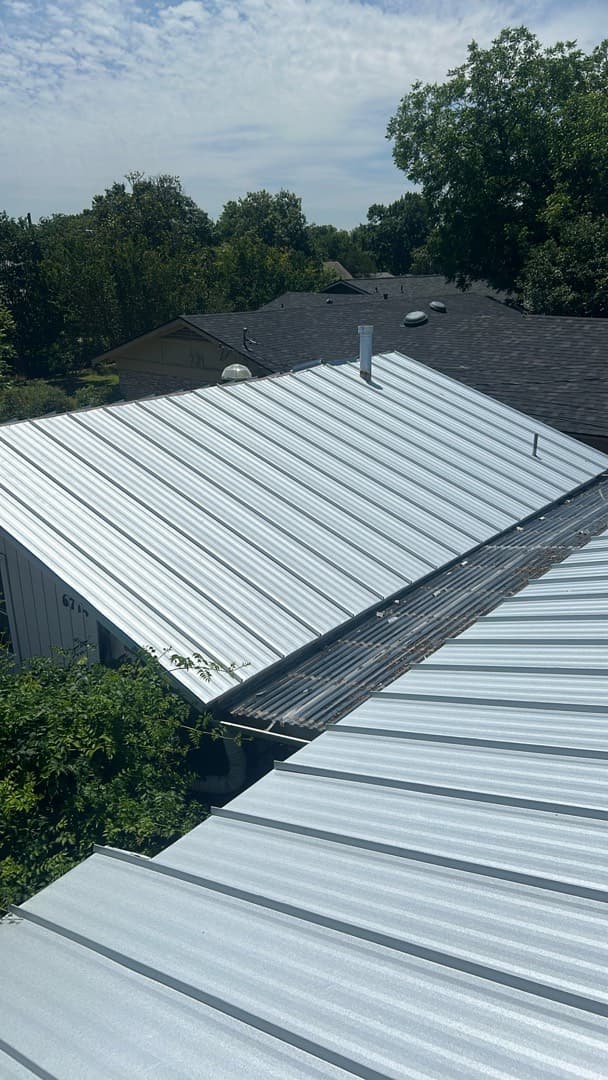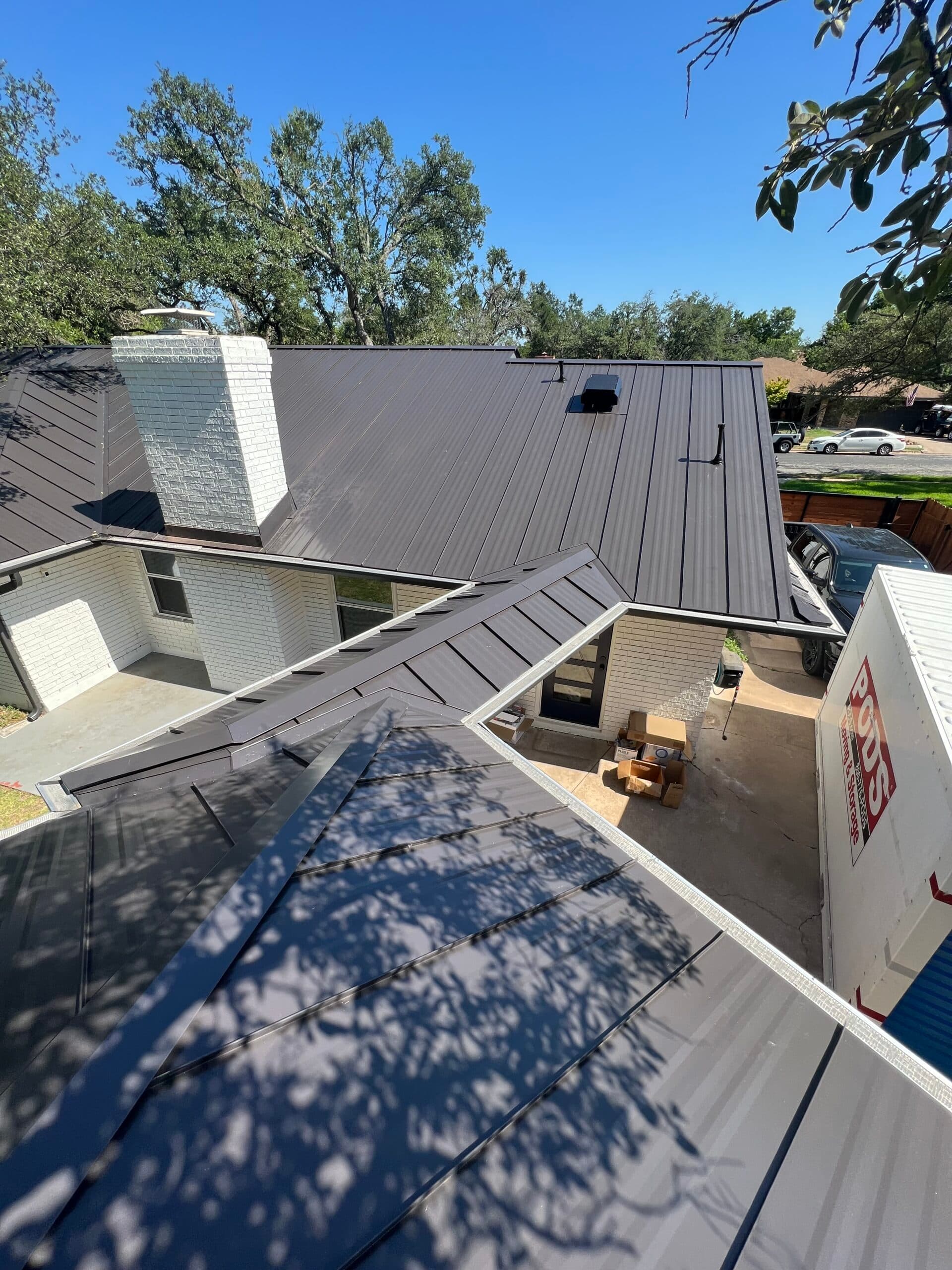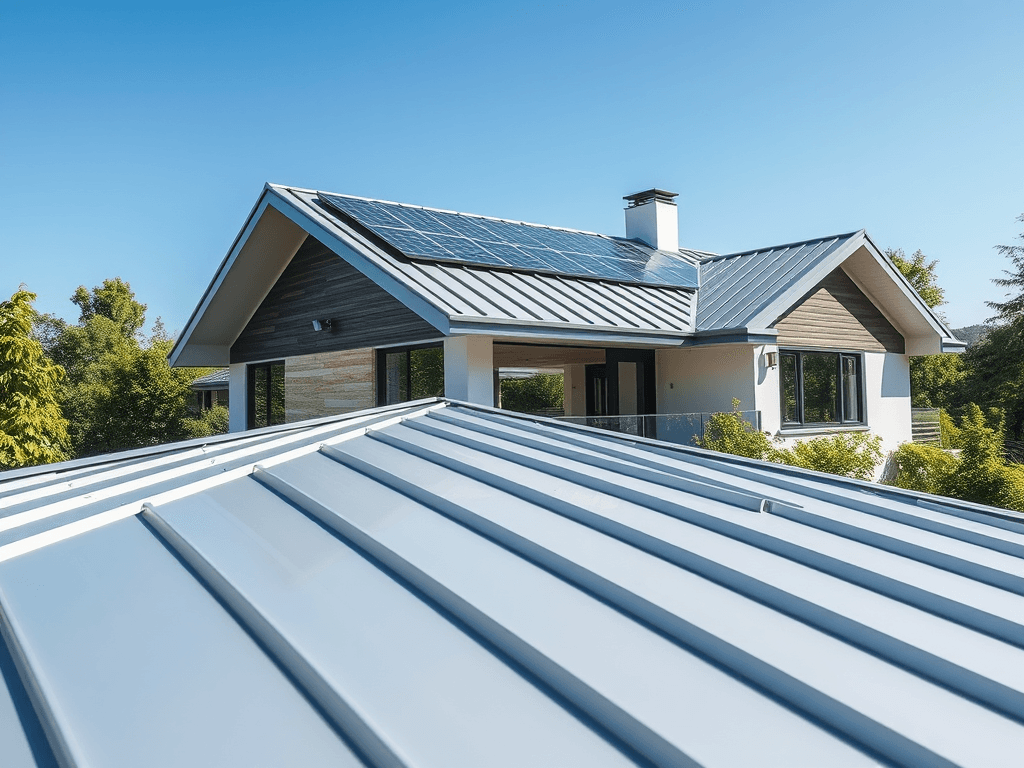
Austin homeowners are installing standing seam metal roofs at a faster rate than any other Texas market — and it's not hard to see why. The city's rapid growth, premium home values, and concentration of modern architecture make standing seam a natural fit. Add in brutal summers that push 110°F, hailstorms that wipe out entire neighborhoods, and some of the highest homeowners insurance premiums in Texas, and the math starts to make sense.
This guide covers everything Austin-area homeowners need to know: real 2026 costs, which neighborhoods allow it, what to expect from a certified installation, and how to avoid the wave of unqualified contractors chasing the boom.
Standing Seam Metal Roof Costs in Austin (2026)
Installed pricing for standing seam in the Austin metro runs $15–$24 per square foot — slightly above the state average due to higher labor costs and material logistics.
| Home Size | Austin Low | Austin High | Typical |
|---|---|---|---|
| 1,500 sq ft | $22,500 | $36,000 | $28,000 |
| 2,000 sq ft | $30,000 | $48,000 | $37,000 |
| 2,500 sq ft | $37,500 | $60,000 | $46,000 |
| 3,000 sq ft | $45,000 | $72,000 | $55,000 |
| 4,000 sq ft | $60,000 | $96,000 | $74,000 |
These prices include tear-off of existing roofing (one layer), deck inspection, premium high-temp underlayment, panels, all trim and flashing, labor, permits, and cleanup.
What separates Austin quotes from low-ball contractors: Legitimate standing seam requires floating clips (not fixed), high-temp peel-and-stick underlayment, and crews certified by the panel manufacturer. These add cost — and they're what make standing seam last 50-70 years.
Austin Neighborhoods: Which Allow Standing Seam?
Favorable for Standing Seam
East Austin, Mueller, Cherrywood, Govalle — Modern and eclectic architecture is the norm. Standing seam's clean lines fit perfectly and HOA restrictions are minimal or nonexistent in most of these neighborhoods.
Bouldin Creek, Travis Heights — Premium home values, design-forward owners. Standing seam with darker tones (Charcoal, Slate) is common on new builds and whole-house renovations.
Tarrytown, Westlake (custom builds) — Older estates being renovated or replaced often go standing seam. Established HOAs exist but many allow standing seam in approved colors.
Domain area, North Austin new construction — Standing seam is increasingly spec'd by custom builders. Modern farmhouse aesthetic drives adoption.
Dripping Springs, Bee Cave, Lago Vista — Hill Country aesthetic is highly compatible with standing seam. Dark Galvalume, weathered zinc tones, and barn red are popular. Most areas are unincorporated with minimal restrictions.
Proceed with HOA Approval First
Circle C Ranch, Steiner Ranch, Avery Ranch — These established HOAs have architectural review committees. Standing seam is approved in many cases, but submit plans and color samples before ordering materials. Contemporary or neutral colors (Charcoal, Dark Bronze, Slate Gray) have the best approval rates.
Barton Creek, Rob Roy — Luxury neighborhoods with strict architectural controls. Standing seam can be approved with the right profile and color — coordinate with your contractor to prepare a proper submittal package.
Lakeway, Rough Hollow — HOA approval required. Some Lakeway communities restrict metal roofing appearance; others are fine with it. Verify before committing.
Higher Restriction Risk
Hyde Park Historic District — City of Austin Historic Landmark Commission has jurisdiction over significant alterations. Metal roofing may require HDC review. Consult with the City of Austin Planning Department.
Old West Austin (Pemberton Heights, Bryker Woods) — Some homes are in historic overlay zones. Verify zoning classification before proceeding.
When in doubt: your contractor should help prepare the HOA submittal package, including panel profiles, color chips, and manufacturer spec sheets. We've navigated dozens of Austin HOA approvals and know what gets through.
Austin's Climate: Why Standing Seam Performs
Summer Heat
Austin's average July high is 97°F, with peak temperatures regularly hitting 105-110°F. A standing seam roof with a cool-roof PVDF finish reflects 65-70% of solar radiation versus 5-15% for dark asphalt.
Estimated annual cooling savings for Austin homes:
- 2,000 sq ft home: $450–$700/year
- 2,500 sq ft home: $550–$850/year
- 3,000 sq ft home: $650–$1,000/year
Austin Energy's cool-roof rebate program has historically offered credits for Energy Star-qualified roofing materials — ask about current availability during your estimate.
Hailstorms
Austin sits in the heart of Texas hail alley. The city averages 3-4 significant hailstorm events annually, with some years producing multiple 1-2" hailstone events. The April 2016 San Antonio-Austin corridor storm (estimated $1.4B in damage) is the reference point every insurance adjuster uses.
Standing seam earns Class 4 impact resistance — the highest UL rating available. In the 2016 storm and others since, standing seam roofs sustained cosmetic denting but structural failures were essentially zero. Asphalt shingles on neighboring homes required full replacement.
Insurance implications: Class 4 impact-rated metal roofing qualifies for discounts of 15-40% with most major Texas carriers. On an Austin homeowners policy averaging $3,500-$5,000/year, that's $525–$2,000 in annual savings. Over a 50-year roof lifespan, that offsets a significant portion of the installation premium.
Wind Events
Austin's position between the Gulf Coast and the plains means it occasionally catches the outer bands of Gulf systems along with regular Central Texas thunderstorm winds. Standing seam panels with mechanical seams and floating clip systems are rated to 140+ mph — above the threshold for most Texas wind events.
Standing Seam vs. Other Metal Options in Austin
Standing Seam vs. Stone-Coated Steel
Both are excellent 50-year roofing systems. The key differences:
| Factor | Standing Seam | Stone-Coated Steel |
|---|---|---|
| Appearance | Modern/industrial/farmhouse | Traditional shingle or tile |
| HOA approval | Variable | High (90-95% approval rate) |
| Cost | $15-24/sq ft | $12-18/sq ft |
| Lifespan | 50-70 years | 50 years |
| Maintenance | Zero | Minimal |
| Solar panels | Ideal (no penetrations) | Possible but less ideal |
If your neighborhood is HOA-controlled and the committee leans traditional, stone-coated steel is often the smarter path. If you have a modern home or architectural freedom, standing seam is the superior system.
Standing Seam vs. Corrugated/R-Panel Metal
R-panel and corrugated metal have exposed fasteners — screws driven through the metal surface. Those screws are leak points as rubber washers degrade in Texas UV. R-panel costs less ($8-12/sq ft installed) and is appropriate for agricultural buildings and some commercial applications, but it's not a comparable residential roofing system to standing seam.
Austin-Specific Neighborhoods: Cost Examples
Mueller (2,100 sq ft modern townhome): $32,000–$46,000 for Galvalume snap-lock with Charcoal finish. Modern architecture is perfect for standing seam. No HOA complications typical.
Circle C Ranch (2,600 sq ft traditional): $40,000–$58,000 for painted steel in Slate Gray. HOA approval typically straightforward for neutral tones. Stone-coated steel is an alternative if HOA declines.
Westlake/Bee Cave (3,500 sq ft custom): $55,000–$84,000 for aluminum standing seam with custom finish. Premium builds in this market routinely specify standing seam. HOA approval is property-specific.
Dripping Springs farmhouse (2,200 sq ft): $34,000–$50,000 for Galvalume natural finish or barn red. Hill Country aesthetic is ideal for standing seam. Minimal restrictions in most unincorporated areas.
Finding a Qualified Standing Seam Contractor in Austin
Standing seam is not a job for a general roofing crew. It requires:
- Manufacturer certification — panel manufacturers (McElroy, Sheffield, ATAS, Englert) require certified installers for warranty validity
- Specialized tools — roll formers for on-site fabrication, seaming machines for mechanical locks
- Experience — standing seam details (flashings, transitions, valleys) are more complex than any other residential system
Questions to ask any contractor:
- Which panel manufacturer are you certified with?
- Are you using snap-lock or mechanically seamed panels for my roof pitch?
- What underlayment do you specify? (Correct answer: high-temp synthetic or peel-and-stick)
- Are you using floating clips or fixed clips? (Floating is correct for Texas thermal movement)
- Can I see examples of standing seam installations you've completed in Austin?
Beware any contractor who cannot answer questions 1-4 specifically. Standing seam installed incorrectly looks fine for 2-3 years and then fails at every flashing and seam point.
Frequently Asked Questions
Q: How long does standing seam installation take in Austin? A: Most residential projects: 3-6 days. Complex homes with dormers, skylights, or steep pitches: 7-10 days.
Q: Do Austin HOAs typically allow standing seam? A: It depends heavily on the neighborhood. East Austin and modern-built areas: generally yes. Traditional established HOAs (Circle C, Avery Ranch): approval required, often granted for neutral colors. Verify before purchasing materials.
Q: Will standing seam void my Austin Energy solar rebates? A: No — in fact, standing seam enhances solar ROI. Standing seam clamps attach to the seams without drilling through the panel, preserving the roof warranty while enabling solar installation.
Q: How do I handle a standing seam insurance claim after Austin hail? A: Call us first. We document damage with photos, measurements, and a scope of work that accurately captures the full extent of impact. We've worked with every major carrier in Texas and know how to present standing seam claims accurately.
Get a real number for your Austin home. Request a free standing seam estimate — we measure, specify, and deliver a detailed written proposal with no obligation.